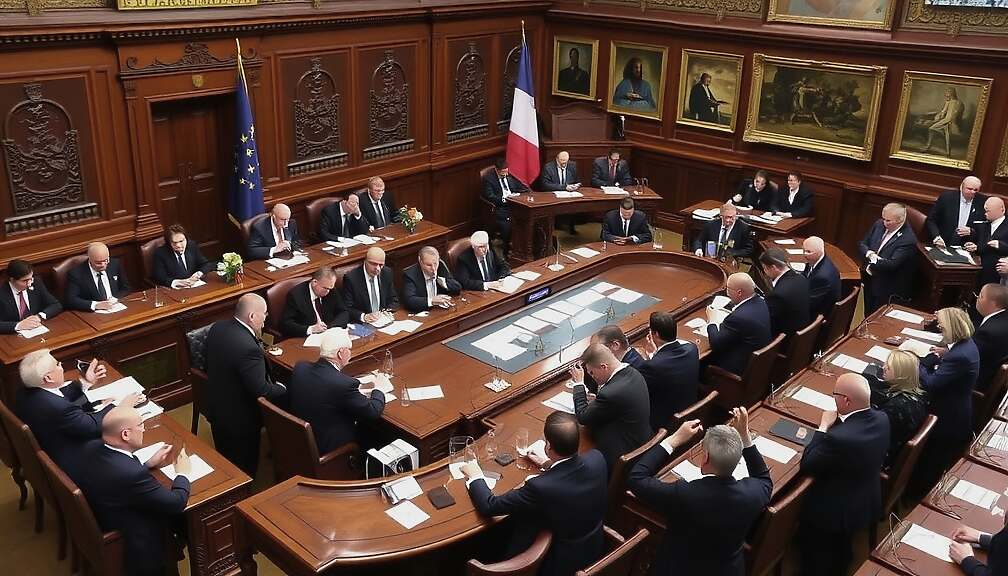
The French government survived two votes of no confidence in the National Assembly before passing the current year’s budget. On Monday, 260 deputies backed the left‑wing proposal, but did not include the Socialists; a right‑populist motion from the Rassemblement National received 135 votes. A majority of 289 votes would have been required for either proposal to defeat the government.
The adopted budget aims to bring the state deficit down from 5.4 % of GDP to below five percent. Whether the target will be met is uncertain, because the austerity measures originally outlined by Prime Minister Sébastien Lecornu were less severe than announced. The defence budget will rise by €6.7 billion, reaching a total of €57.1 billion.
Despite the planned deficit reduction, France remains below the European Union’s 3 % ceiling. State debt is projected to climb from about 116 % of GDP in 2025 to roughly 118 % in the current year. Lecornu’s centre‑right coalition does not hold an outright majority in the National Assembly and has had to secure shifting support. To get the budget through, the prime minister invoked Article 49.3 of the constitution-allowing the law to take effect if subsequent no‑confidence motions are survived-even though he had initially pledged not to use that provision upon taking office.