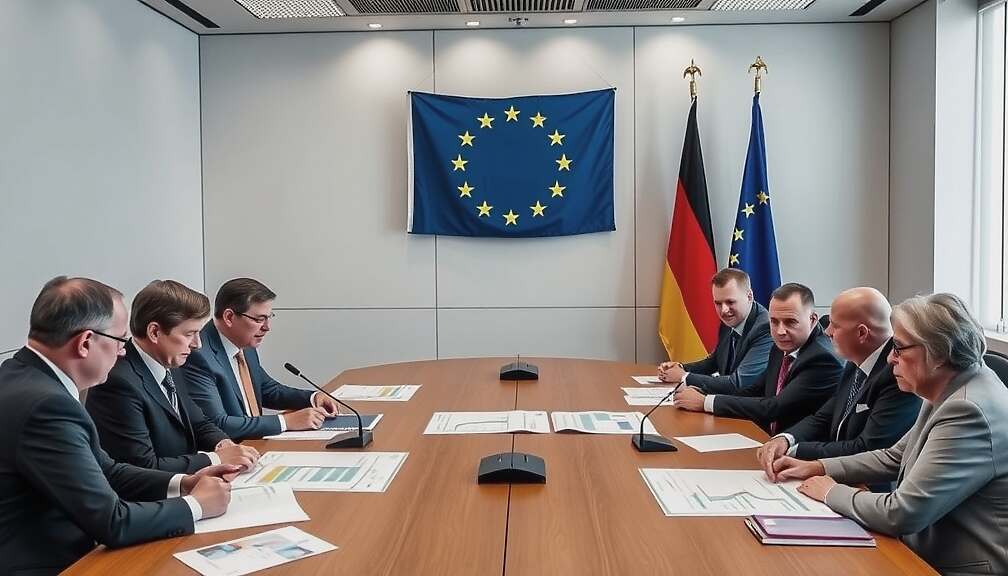
The German federal government is increasingly open to introducing “Buy European” rules to safeguard its own economic interests.
Chief economist Armin Steinbach of Finance Minister Lars Klingbeil (SPD) writes in a guest column for the Handelsblatt that “free trade is security‑politically blind”. He argues that buying European goods can help address critical dependencies and reduce risks that arise from economic concentration.
In practice, “Buy European” would mean setting a mandatory minimum quota for European‑made materials or components. Although such measures were long frowned upon, they are gaining traction worldwide. The United States has used them, Canada has recently adopted similar rules, and China repeatedly employs them as well. Steinbach stresses that “Buy European” is not a unilateral provocation but a level‑setting measure. He calls for a review of these regulations in areas such as electric‑vehicle subsidies and infrastructure projects.
Preserving industrial capacity is also deemed essential for deterrence, particularly the “vital steel industry”. This is not just a security concern; it can also contribute to climate policy. For example, electrically powered cars produced in Europe may have lower transport‑related CO₂ emissions than imports from Asia. The same logic applies to the public sector: if a lead market for “green steel” is created-perhaps through road and rail construction-public procurement could drive cleaner production.
In short, the “Buy European” initiative aims to reduce dependence on foreign suppliers, strengthen domestic industry, enhance military deterrence, and support climate‑friendly manufacturing, especially in critical sectors like steel and clean mobility.