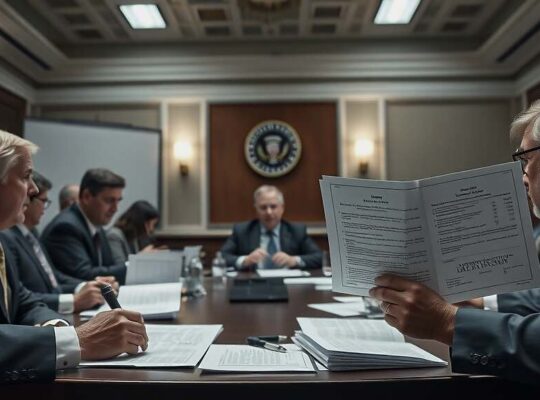
Wolfgang Ischinger, chairman of the Munich Security Conference, has suggested that Germany give Poland a number of weapons systems to allay its neighbour’s concerns about the Bundeswehr’s increasing size. The proposal has been met with scepticism from German politicians and security experts.
Professor Carlo Masala of the Federal Defence University in Munich told “Die Welt” that it feels rather strange, even paternalistic, to “gift” equipment to a country that has been building one of NATO’s strongest conventional forces for several years. He added that such gestures are usually directed toward smaller states in the Global South because they lack the funds to modernise their own armies.
Marie‑Agnes Strack‑Zimmermann, the FDP’s chairwoman of the European Parliament’s defence committee, recalled a 2011 remark by Polish Foreign Minister Radosław Sikorski, who warned that he feared a strong Germany more than a weak one. She criticised the idea of using weapons gifts to soothe fears of German dominance, arguing that Europe is waiting for a shared defence that does not let a handful of voices or domestic narratives about reparations distract from the larger goal.
Thomas Erndl, the CSU’s defence‑policy spokesman in the Bundestag, said a strong Bundeswehr protects Germany and its allies. He stressed that the effort to modernise equipment and personnel is a visible sign of Germany’s responsibility for European security, a stance that is particularly appreciated in Eastern Europe. He believes that any historical sensitivities should become secondary if the focus remains on rapidly extending military capabilities.
Adis Ahmetovic, spokesperson for the SPD’s foreign‑policy group, agreed that Germany will carry an enormous responsibility in the coming years, especially as the Trump administration has increasingly questioned alliance loyalty. He argued that trust does not come from symbolic gestures but from reliable, close cooperation, and called for deepening established frameworks such as the Weimar Triangle.
Agnieszka Brugger, the Green Party’s security‑policy spokeswoman, described Ischinger’s idea as “off‑kilter” and more confusing than helpful. She contended that trust, cooperation, leadership, and resolve cannot be bought with money, slogans, or hardware. Mixing the proposal with the fraught issue of reparations was, in her view, particularly unhelpful. Brugger acknowledged the worries of partner countries that Germany might become militarily and politically dominant in Europe but said those concerns are more about political ideology than about abstract numbers of tanks.
Hans‑Peter Bartels, president of the German Security Council, expressed openness to the suggestion. He pointed to the Bundeswehr’s difficulties in recruiting enough personnel for the new systems, implying that giving them to Poland could benefit both sides. CDU‑foreign‑policy spokesman Roderich Kiesewetter agreed that the idea is worth considering but is “far from sufficient” to erode mistrust. He argued that merely handing over a few tanks does not absolve Germany of its responsibility to defend Europe.
Kiesewetter additionally urged Germany to think about forward‑staging matériel on a larger scale, such as parking air‑defence systems and other force‑multipliers in Poland and the Baltics. He also suggested integrating a German brigade or multiple battalions into the Polish forces. Such personnel cooperation, according to him, would send a clearer message that Germany is deploying its combat power for the benefit of its NATO partners, not just for its own national defence.