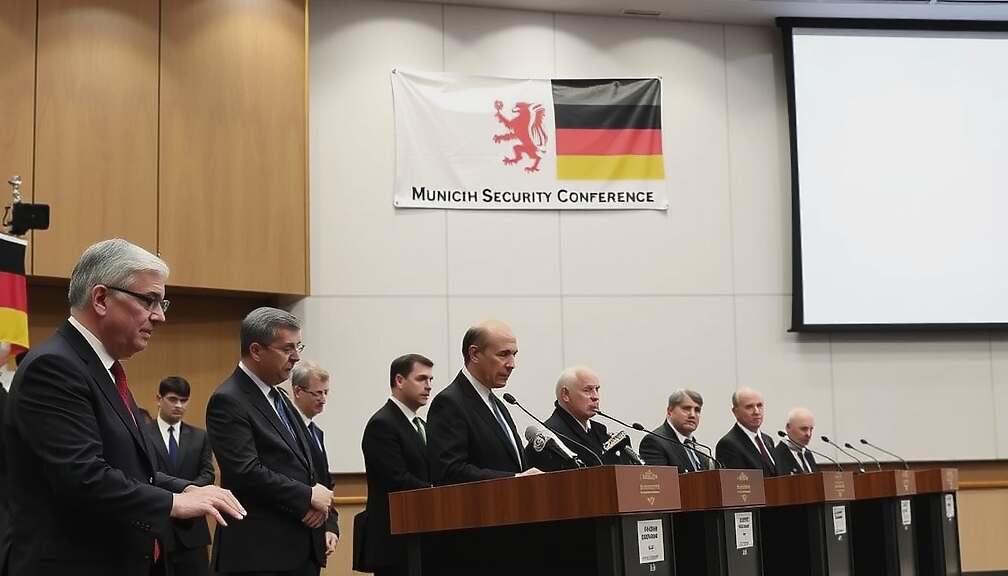
Before the Munich Security Conference, André Wüstner, chair of the German Armed Forces Association, criticised the slow pace of rearmament in Germany and Europe. He praised the federal government for measures such as allowing an exemption from the debt brake for defence spending, but said the Bundeswehr is still not much stronger than before 2022. New weapons systems and munitions are being added, yet progress remains too slow. He pointed out that NATO evaluates forces by capability and readiness rather than just the number of recruits or the quantity of procured equipment, and that this assessment still looks bleak.
Wüstner called for a fundamental structural overhaul of the Bundeswehr, arguing that in an emergency there can be no prolonged transition from a peace posture to a defence posture. The organisation and personnel must be aligned with the required defensive tasks; this automatically dictates changes in organisational and human‑resource structures. He described this as the most daunting task the armed forces have faced since their founding. He also highlighted weaknesses among major European allies, noting that many still lack clear rearmament plans and rising defence budgets needed to reach NATO’s strategic goals. He singled out France and the United Kingdom – countries that loudly claim strength – as particularly deficient, in contrast to Scandinavians or Eastern Europeans who have clearer plans.
Regarding personnel, Wüstner said Defence Minister Boris Pistorius’s target of 260 000 active soldiers and 200 000 reservists is too low. Pistorius’s figure was a political decision based on a rough estimate, and Wüstner has repeatedly stressed that it falls short, especially after the United States has placed the main responsibility for Europe’s conventional security on Germany. Even with recent recruitment successes, Wüstner considers it unrealistic that all required capabilities could be met solely through voluntary enlistment.
He also identified shortcomings in the defence industry, noting that companies frequently fail to deliver on promised timelines and quality standards. This is more than an annoyance; firms must show how to translate additional funding into real production. The Russian threat grows through numbers, pressure and adaptability. If Putin seeks to test NATO’s eastern flank, Germany cannot simply request a pause in the Rules of Procedure-it must already be on the ground and ready to defend.
According to Wüstner, Defence Minister Pistorius possesses the trust of the troops, the necessary will, backing from cabinet and parliament, a sufficient defence budget and societal support. “Which defence minister has ever had all of that?” he asked. Pistorius must keep his footing and, he knows, deliver.