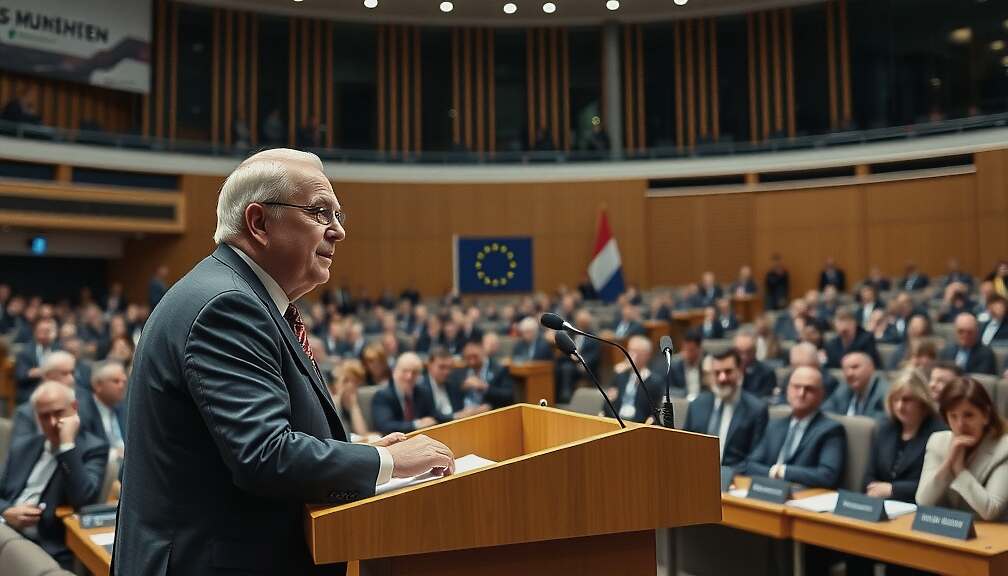
Norbert Röttgen, a senior CDU foreign‑policy figure, urged at the Munich Security Conference that Europe must strengthen its own defence capacity and economic competitiveness. He admitted that Europe still lags in both areas and that the implementation of joint decisions has fallen short.
According to Röttgen, the analysis of defence needs is now carried out jointly across member states, but “the deliverables that come out are too few”. He identifies two key priorities: first, building a robust, self‑sufficient defence capability; second, boosting economic competitiveness throughout the continent. Germany, he said, is progressing in defense, yet Europe as a whole remains too far behind in both realms.
Röttgen cautioned against settling for simple damage‑control measures. “We need to expect more in these times-beyond avoidance of losses, we must realistically aim for constructive outcomes”. This stance reflects what he sees as the Europeans’ role within the transatlantic alliance as well as the necessity for a renewed, shared understanding with the United States.
On the U.S. side, he said he does not expect the ambassador to openly distance himself from President Donald Trump. “The key audience isn’t the Bavarian court but the White House” Röttgen remarked. He described U.S. Secretary of State Marco Rubio as being in a continual rivalry with JD Vance over who will succeed Trump, and noted that pleasing Trump is “the top priority”.
In a broader European context, Röttgen offered a mixed assessment. He praised the resolve shown regarding Greenland and the willingness to impose retaliation measures if needed. He criticised the ineffective use of frozen Russian assets. Overall, the sense that decisive action is required is growing across Europe, though he acknowledged that many still do not see the threat posed by Russia’s war with the same urgency.
Looking ahead to the planned trilateral meeting of Germany, France, and the United Kingdom, Röttgen dismissed the notion that such a grouping could replace the EU. He stressed, however, that in some areas there is still a lack of consensus and that the region needs “pioneers who lead the way” to achieve progress.