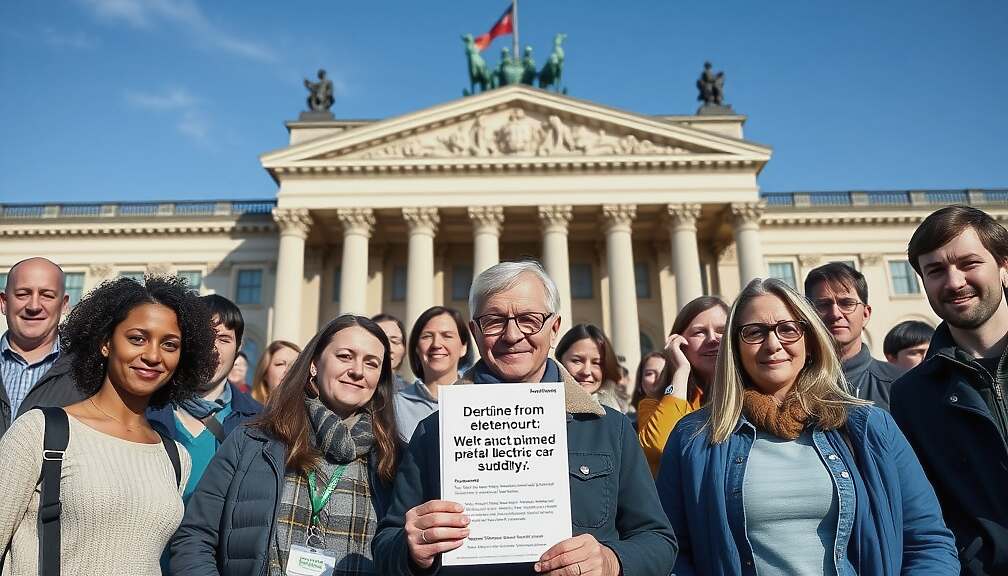
Kay Scheller, president of the German Federal Court of Auditors, argues that the federal government’s promotion of electric mobility is directionless. He told the Sunday newspaper “Welt am Sonntag” that many citizens cannot see a coherent strategy. “We jump in for e‑car subsidies, then halt, and then start again – how can a consumer trust this?” Scheller said. “It looks unplanned; where’s the long‑term plan?”
Scheller also calls other subsidies into question. “We must scrutinise all voluntary expenditure programmes for necessity” he said. He cited remaining climate‑harmful subsidies and tax perks, such as diesel support for public‑transport buses, where higher consumption equals higher subsidy. “Or the tax rebate for artisanal services – the government forfeits billions in revenue to a scheme that hardly tackles undeclared work. We need to tackle that”.
The auditor urged politicians to show more courage in cutting costs and prioritising state spending. “Those who must adapt to a changed reality must decide what truly takes precedence” Scheller told “Welt am Sonntag”. “That requires decisiveness and bravery, qualities that, in my view, are not present at the level the country needs”.
He also demanded a review of the social safety net. “It should target the truly vulnerable and those in genuine need” Scheller said. “Extending benefits far into the middle class must be examined. How much more can we afford when we need room for new responsibilities?”
On defence, Scheller warned that Germany can no longer rely solely on U.S. protection and must invest in its own territorial defence. He also criticised the state of worn‑out infrastructure-railways, highways, and rotting bridges-that needs urgent renewal.
Regarding pensions, Scheller criticised the planned enlargement of the “mother pension” and the extension of the retirement line. “The pension transfer system no longer works without massive contributions from the federal budget-currently about €120 billion” he said. “New benefits add pressure to financing. The Court recommends not expanding that subsidy further; the funds are needed elsewhere”.
Scheller stresses that recognising the seriousness of the situation is not enough; decisive action is required. “A functioning state needs sustainable budgeting and solid finances that adapt to new realities” he said. “We are falling behind. Reality will not adjust to our limitations”. He concludes that all voluntary state payments should be evaluated for necessity and that public servants also possess significant savings potential.
He called for a review of administration efficiency. “Senior federal agencies possess great potential for cost savings” Scheller warned. “Large matrix structures in many seemingly simple issues create complexity and delay decision‑making”.
Scheller criticises the allocation of the so‑called special infrastructure fund, noting that billions earmarked for infrastructure are not used strictly for additional investments. “The money is not being invested as extensively as it should be in debt‑financed programmes” he said. “This leaves room for consumption spending in the core budget, which contradicts the intended addition of this resource”.
He described the situation as a profound institutional challenge: “We face massive obstacles but have an utterly insufficient fiscal foresight. Funds meet structures that often cannot use them effectively”. The auditor identified structural deficiencies: “The system makes economic action difficult. We have inefficient structures, limited digitisation, and highly complex procedures involving many actors who often obstruct each other. That costs time, money, and effectiveness. Processes across the entire public administration need urgent improvement”.