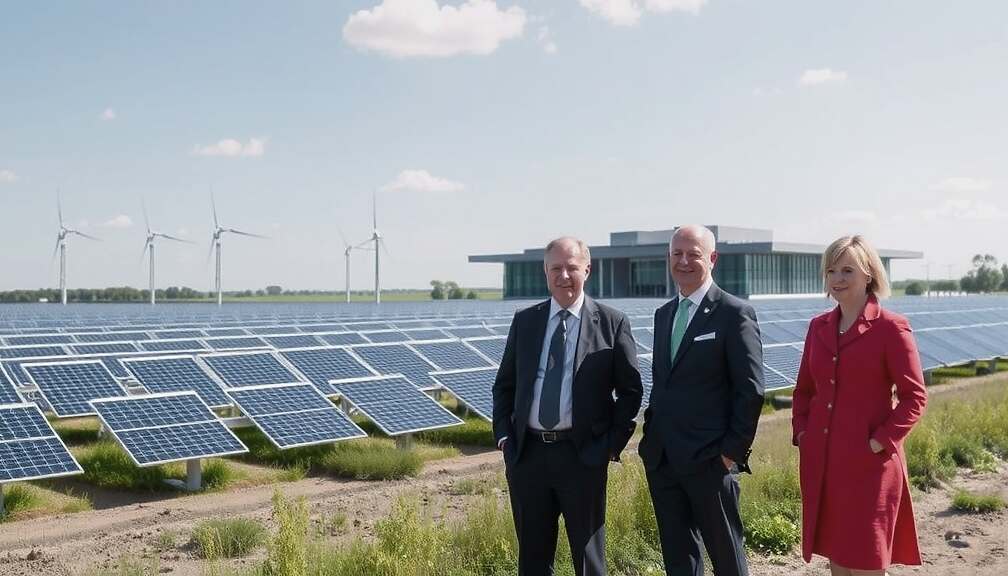
The German Federal Ministry of Economic Affairs is proposing new restrictions on the expansion of solar energy, according to a draft revision of the Renewable Energy Act issued on 22 January and reported by “Der Spiegel”. Under the draft, solar installations on private homes with a capacity below 25 kilowatts would no longer qualify for feed‑in subsidies. Presently such small systems receive tariffs between 6.73 ¢ and 12.34 ¢ per kilowatt‑hour, depending on their size and whether they feed all or only part of their power into the grid.
Operators of small installations (under 25 kilowatts) would have to secure a buyer for their electricity before they could feed it to the network, a shift from the current practice where grid operators are required to purchase the power.
For the very smallest plants (below 7 kilowatts) a new mandatory installation of smart meters is planned. Operators would need to apply for early deployment of such meters by the end of 2028. Mobile solar panels on balconies (balkonkraftwerke) are exempt from this rule.
Solar roof patches are also affected. The draft would allow these systems to feed only half of their nominal output into the grid; all excess power would have to be consumed on‑site or stored. It remains unclear whether this limitation applies only to installations under 25 kilowatts or extends up to 100 kilowatts. Previously, the feed‑in limit was capped at 60 % of capacity, but this restriction disappeared after the installation of a smart meter. Balcony panels are again excluded.
A fifth point in the proposal would alter the market segment for larger plants. Currently, installations above 25 kilowatts receive varying subsidy rates depending on their size. The new proposal would standardise this rate, a change that is likely to favour very large solar parks operated by companies such as EON and RWE over smaller commercial developers, capitalising on the significant economies of scale in plant construction.
When asked for comments, the Ministry declined to discuss the draft details in advance of the public consultation, stating that this would be postponed until the work on the EEG revision is complete.
The ministry argues that the EEG must be updated because cost‑effectiveness and supply security have been insufficiently addressed in recent years. It claims that the public should no longer fund solar generation from small rooftop arrays that could already operate profitably without subsidies.
Lastly, the article notes that the growth of photovoltaic and wind capacity in the past year fell short of the targets set by the EEG. Since 2025, 7.8 GW of wind power is planned per year, and from 2026 the target for solar installations rises to 22 GW annually. The reduction of feed‑in tariffs after 2012 has been cited as a key reason for the slowdown in expansion.