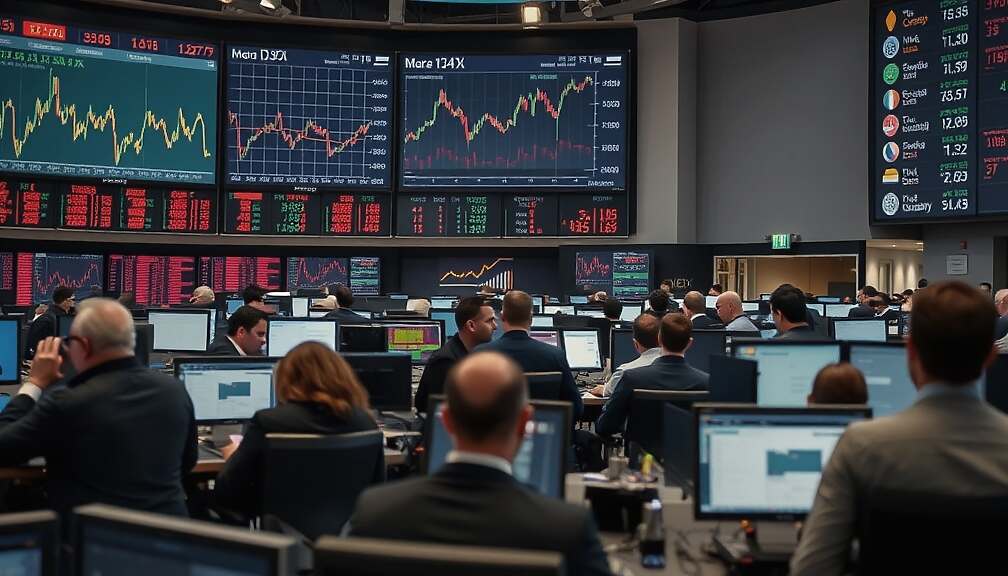
30 a..m.-about 2.3 percent below Friday’s closing level. The only shares moving to the top of the daily price list were those of Rheinmetall and RWE; the lower end was occupied by Deutsche Bank, Zalando and Siemens.
Investors largely focused on the war in the Middle East. “The DAX starts the week without panic, even amid an unprecedented geopolitical escalation in one of the world’s most important oil‑producing regions” said Jochen Stanzl, chief market analyst at Consorsbank. “The Iranian flare‑up offers a steep surface for a sharp correction, but the sell‑off remains disciplined. That is the key takeaway on Monday. We see orderly trading: it’s falling, but there’s no panic. Markets appear to be assuming a temporally limited conflict”.
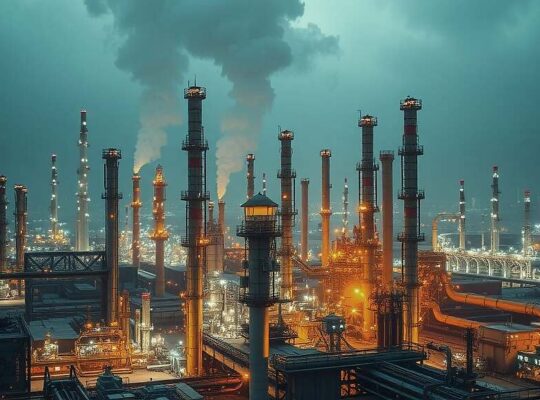
Meanwhile, the worst‑case scenario for the global oil market has emerged-that Iran might weaponise oil and close the Strait of Hormuz. “An explosive rise in oil prices, a scenario often feared, has not materialised so far” Stanzl added. “The price remains well below the $100 benchmark and has come off its daily high. Adequate inventories and a possible OPEC+ output increase help assuage fears of an oil shortage”.
In the euro‑dollar pair, the single currency was weaker early in the day: one euro fetched 1.1704 USD, while one US dollar traded at 0.8544 EUR.
Oil prices were on the upside as well. At around 9 a.m. German time, a barrel of North Sea Brent was trading at $80.00, a 9.8 percent increase from the previous day’s close.