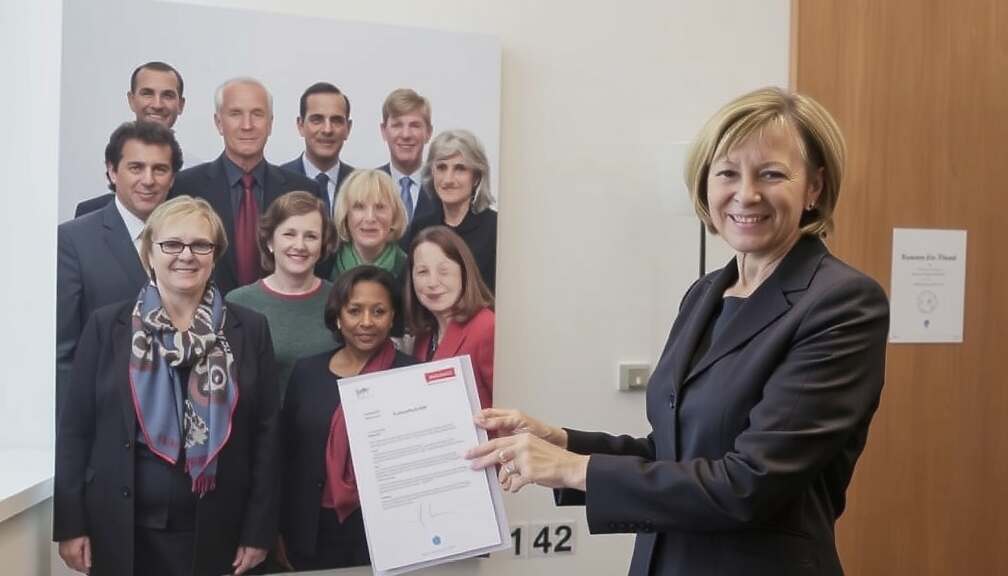
Minister Karin Prien (CDU), who heads the Federal Ministry of Education, Family, Senior Citizens, Women and Youth, said she would like to include men in the ministry’s title. “I have no objection to also being a minister for men” she told the Funke media group’s Friday editions.
Forty years ago the ministry’s name was changed to recognise women. “Today we also have to pay attention to men’s specific needs. Perhaps they should be reflected in the ministry’s name as well. In any case I want to address their concerns, because a successful equality policy speaks to both women and men” she added.
When asked whether the International Women’s Day on March 8 should be renamed “Gender Equality Day” Prien responded cautiously. “That term has grown over time. To change it I would need allies” she said. “What’s clear to me is that we need to look more at men”.
Prien highlighted the growing gap between boys and girls in education. “Over the past few years we have seen that certain groups of boys slip through the cracks both offline and online. Boys drop out of school more often, on average earn lower grades, and are more likely to need additional support. In many stages of education, young women now lead. Some boys grow up in online environments that reinforce problematic messages and repackage old role patterns”. These narratives resonate with uncertain young men.
She acknowledged that the ministry has mainly focused on girls’ needs in recent years. “Now we must broaden our perspective. While keeping girls in view, we need to focus more on boys. Otherwise we risk seeing situations like those in the UK or the US, where some already talk about a lost generation of men-young men with lower education, poorer prospects for advancement and increasing alienation”.
Prien cautioned against turning Women’s Day into a public holiday, modeled on Berlin’s example. “We need to be concerned about Germany’s competitiveness. We do not need more public holidays” she said. “Women and men can still celebrate or fight the day in a meaningful way”.