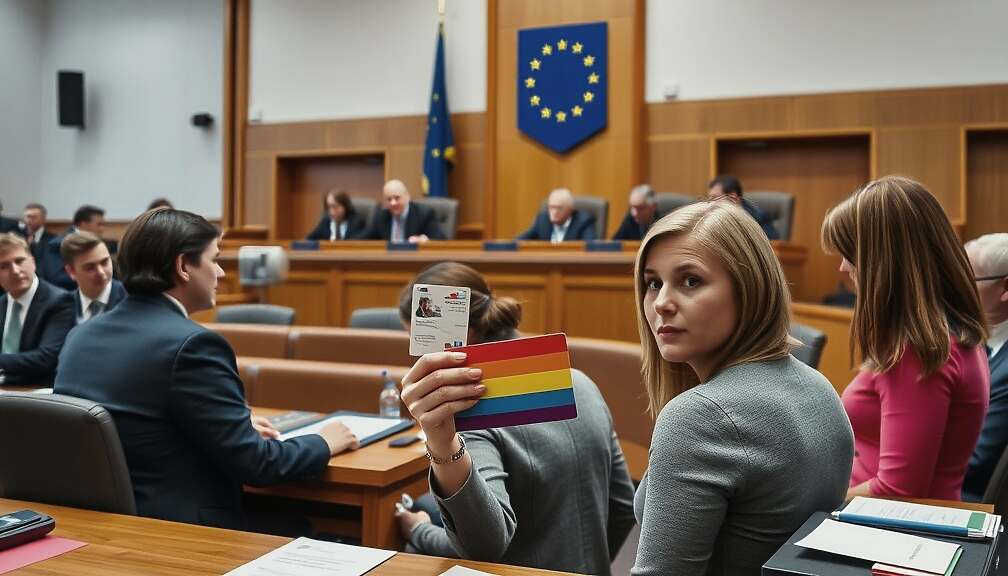
The European Court of Justice clarified that EU member states must set up clear, accessible and effective procedures for the legal recognition of a person’s lived gender identity. In its ruling on Thursday, the court said that any national regulation that prevents a change of gender, name or identification number is incompatible with EU law.
The case arose after the Bulgarian Supreme Court sought the court’s advice because it was uncertain whether a Bulgarian rule was consistent with EU law. The individual involved is a Bulgarian national who was registered at birth as a male, with a corresponding name, personal identification number and identity documents. She now lives in Italy, presents herself as a woman, and has begun hormone therapy.
She applied to Bulgarian courts to amend the personal data on her birth certificate. Despite medical evidence and judicial findings that confirmed her gender identity, the application was dismissed. Under Bulgarian law, any alteration to gender, name or identification number is prohibited.
The Court identified a direct conflict between this regulation and EU law. A mismatch between a person’s gender identity and the information on official documents can impede the exercise of the right to free movement, causing significant inconvenience. In situations such as identity checks, border crossings or workplace interactions, the individual may be required to prove the authenticity of her identity or documents.
The Court held that restrictions on free movement are permissible only if they are based on objective public‑interest considerations and are proportionate in accordance with EU law and the fundamental rights guaranteed by the Charter of Fundamental Rights of the European Union. In particular, the right to respect for private life protects gender identity and obliges member states to establish clear, accessible, and effective procedures for its legal recognition. Therefore, the Bulgarian regulation violates EU law.