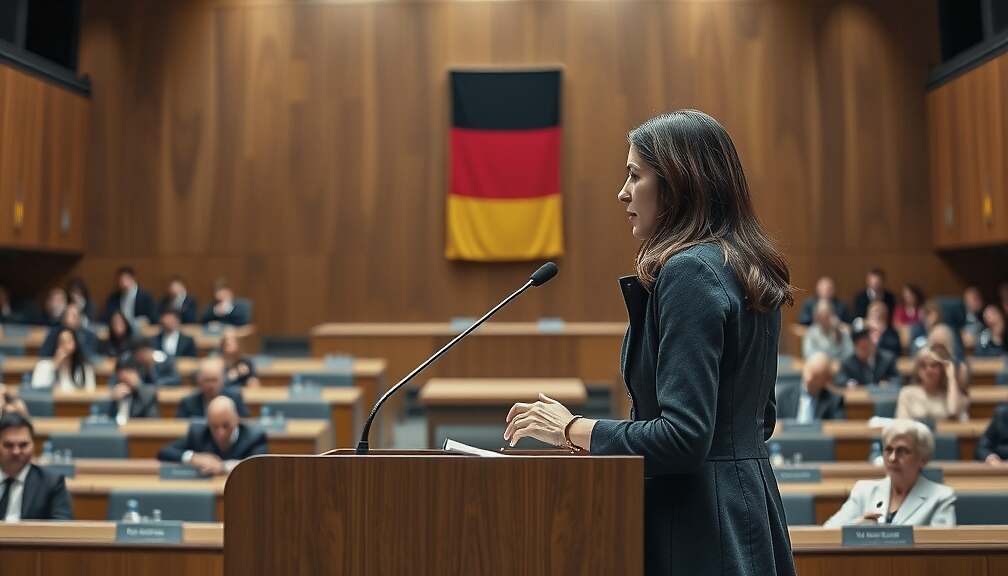
Heidi Reichinnek, chairwoman of the Left Party’s parliamentary group, sharply criticized the federal government during a debate on a proposed social‑media ban for children. She told the “Redaktionsnetzwerk Deutschland” (Friday editions) that “especially mental health and loneliness among young people are pressing issues”. Instead of finally allocating the necessary funds for a genuine child basic income, well‑equipped youth care services, therapeutic offerings, and youth centres-just a few examples-she accused politicians from the Union and the SPD of turning the discussion on age restrictions for social media into a “single most important question”.
Reichinnek called the ban “cheap to implement” and urged the government to address the root causes. She highlighted the need for media literacy programmes and accessible support services where young people and parents can seek advice. In her view, the age limit was merely a distraction. “The government might pat itself on the back for a few weeks, pretending that the age restriction shows it cares about children and adolescents” she said. “But the children will continue to suffer under the uncooperative policies of this government, especially those suffering from budget cuts”.
She pointed out that a multitude of problems-from educational injustice, to insufficient school social and youth work, to child poverty-remain too numerous for federal and state governments to tackle adequately. “The most serious offence against children and adolescents is that they simply have no priority in government policy” she added.
Reichinnek’s remarks referenced a statement by Schleswig‑Holstein’s Minister-President Daniel Günther (CDU). Günther had told the same network that the state had committed a “grave sin” by failing to recognise and act on the harmful influence of social networks in recent years, thereby contributing to the damage suffered by younger generations because the state did not fulfil its protective role.