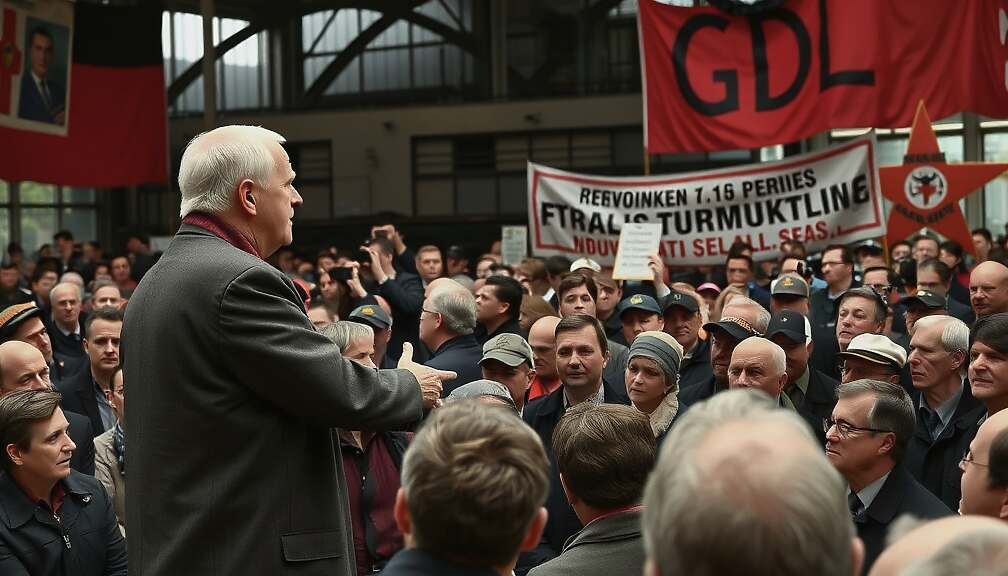
Three‑and‑a‑half years after stepping down, former GDL leader Claus Weselsky expressed frustration with the union’s diminished media visibility. He told ”Stern” that the GDL “appears to be less active these days; no single person is spotlighted, the focus is now on the team”. He added that this shift is not ideal for the union’s exposure.
During the last negotiation round with Deutsche Bahn, which concluded in late February with an agreement and no strikes, Weselsky’s successor, Mario Reiß, celebrated what he called a “great result”. Nevertheless, Weselsky argued that the union did not get enough media coverage. “In the past, Weselsky was everywhere. It’s fine if Reiß isn’t front and center, but the GDL still needs stronger public visibility” he said. “The union is falling short of the self‑promotion I’d like to see”.
Weselsky also criticized the current political debates around working hours. The man who led the GDL from 2008 to 2024 was known for his combative style and fought for the gradual introduction of a 35‑hour week. He complains that “now everyone is just talking about working more”. He described German Chancellor Christian Merz’s comment that people in part‑time jobs are “lazy” as “groundless and beneath our standards”.
Like Merz, Weselsky is a member of the CDU. Despite his advocacy for shorter working hours, he still works three days a week in retirement. He serves on the board of a cooperative founded by GDL members and acts as deputy federal chairman of the German Civil Service Association. “I feel needed” he said.
When he isn’t working, Weselsky spends time on yoga, attends a weekly lesson with a teacher, and enjoys visiting his grandchildren, teaching them skills that will make them “fully capable of life”. He comments that he observes the younger generation as “more of a soft‑eyed cohort”.