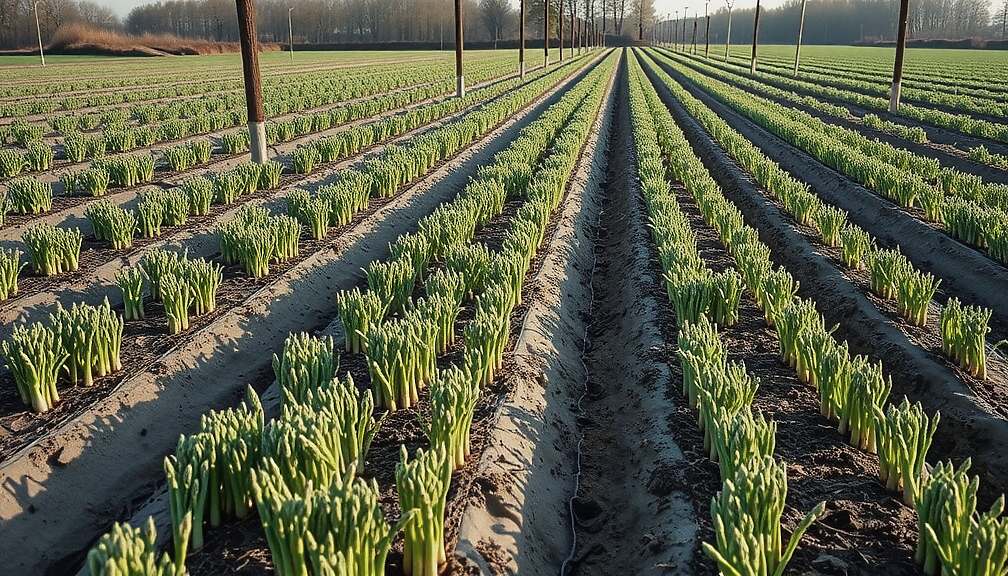
In 2025 Germany harvested 103,900 tonnes of asparagus – a 3.9 % drop from the 108,100 tonnes recorded in 2024 and an 8.5 % decline compared with the 113,600 tonnes harvested in 2015. The lower total yield stems largely from a shrinking cultivation area: nationwide, 22,500 hectares were planted in 2025, which is 1.5 % less than the 22,800 hectares of 2024 and 12.5 % below the 25,700 hectares that were under cultivation in 2015.
The number of asparagus‐farming enterprises has also fallen, more sharply than the area or yield. In 2015 there were 1,900 such farms; by 2025 the figure had fallen to 1,350, a 29.3 % decrease. The decline is especially pronounced among smaller operations.
The regions with the most farms in 2025 were Bavaria (290 farms), North Rhine-Westphalia (265), and Baden‑Württemberg (210). In terms of cultivation area, the largest portions were found in Lower Saxony (4,300 ha), North Rhine-Westphalia (4,100 ha), and Brandenburg (4,000 ha).
Germany also imports asparagus, contributing about a quarter of its overall production. In 2025, 24,500 tonnes were imported, up 6.4 % on the previous year’s 23,100 tonnes and 3.4 % above the 2015 import level of 23,700 tonnes. Of the imported asparagus, 79.4 % entered the country between March and June, aligning with the domestic growing season.
Spain was the leading source country in 2025, providing 26.8 % of the imports (6,600 tonnes). Mexico contributed 19.7 % (4,800 tonnes) and Greece 19.6 % (4,800 tonnes).
Exports of German asparagus reached 4,500 tonnes in 2025, a 2.7 % reduction from 4,600 tonnes in 2024 but a 13 % increase over the 4,000 tonnes exported in 2015.