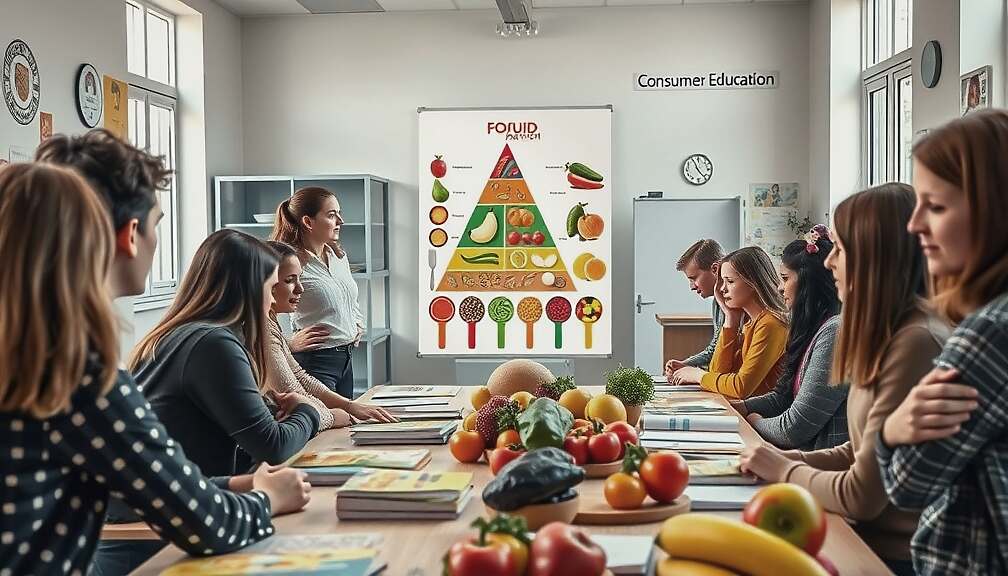
Rising food prices have rekindled the debate about improving nutrition literacy among children and adolescents.
Ramona Pop, head of Germany’s Verbraucherzentrale Bundesverband (VZBV), told the “Redaktionsnetzwerk Deutschland” that teaching nutrition as part of consumer education in schools could help students grasp the topic better. Similar calls have recently come from the Federal Nutrition Center and the food industry.
Pop explained that the VZBV already offers a nationwide consumer‑education program through its “Verbraucherschule” but consumer education has not yet been incorporated into the curricula of all German states. She also highlighted the need for better public awareness about food waste, noting that continuous education-such as clarifying that a product does not become instantaneously spoiled once its best‑before date passes-would be beneficial.
In addition, Pop urged the establishment of a food‑price monitoring office. “Such a body would examine various markets and determine where costs are incurred and what prices are actually achieved” she said. She added, “In France, professionals regularly inspect different markets, from dairy to fruit and vegetables; that system works very well”. According to Pop, price transparency in German food markets remains a “black box”. Consumers ultimately pay high prices at the checkout and wonder how those prices were constructed.