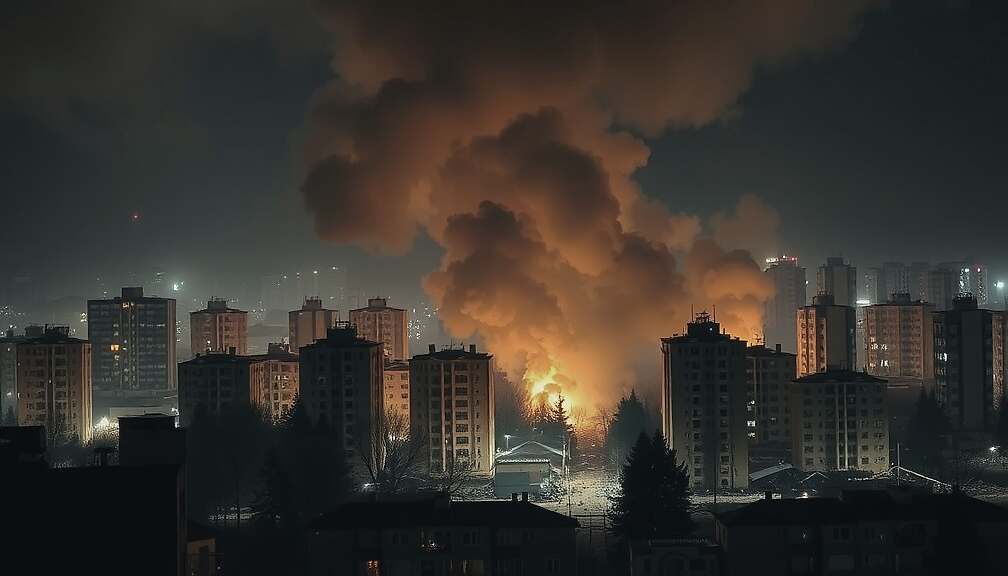
The widespread resumption of massive Russian attacks on Ukraine has met with sharp criticism across Europe following the recent overnight assault on civilian targets, for which an Oreshchnik missile system was used.
Several high-level officials issued strong condemnations. Germany’s Chancellor, Friedrich Merz of the CDU, posted on X that the “reckless escalation” warrants severe censure, making it clear that Germany remains firmly committed to supporting Ukraine. Similarly, Foreign Minister Johann Wadephul condemned the “rocket terror” adding that the deployment of Oreshchnik constitutes another escalation, and emphasized that only a strong Ukraine can compel Putin to negotiate.
France also strongly criticized Russia’s actions. President Emmanuel Macron characterized the use of the Oreshchnik ballistic missile as merely “a form of moving forward” which ultimately reveals the “dead end of the Russian war”. Macron affirmed that this commitment only strengthens France’s dedication to supporting Ukraine, striving for a lasting peace, and bolstering European security.
Meanwhile, European institutions and officials reacted with grave concern. EU Commission President Ursula von der Leyen stated that Russia’s large-scale attack exposed the “brutality of the Kremlin and its disregard for both human life and peace talks” asserting that “Terror against civilians is not strength. It is desperation”.
Further escalating the diplomatic response, EU Foreign Affairs Commissioner Kaja Kallas announced that EU foreign ministers would meet next week to discuss methods for intensifying international pressure on Russia. Kallas specifically categorized the use of ballistic medium-range missiles of the “Oreshnik” type-missiles designed for nuclear payload transport-as “a political intimidation tactic and reckless nuclear saber-rattling”.