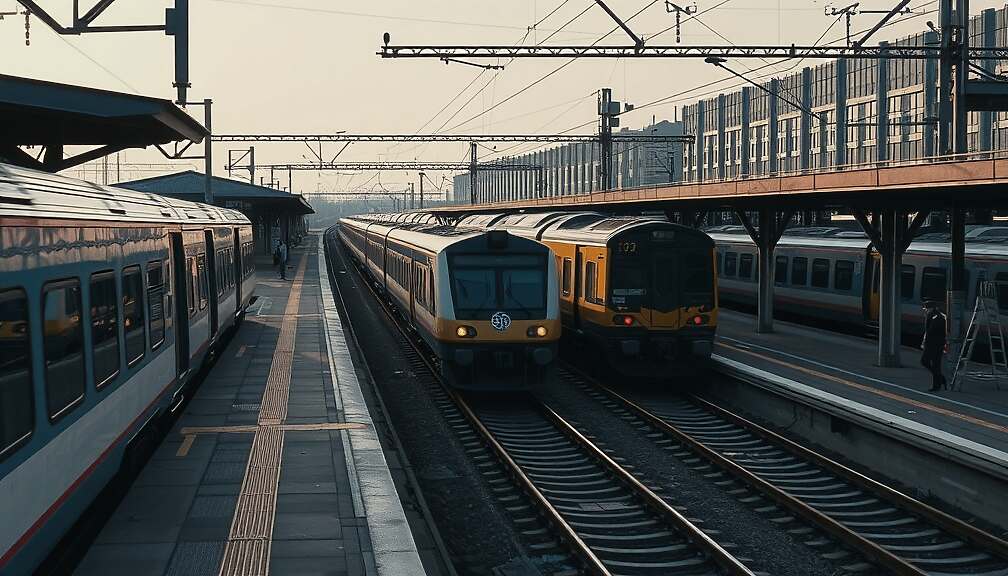
Internal data from Deutsche Bahn indicates that the German national railway company is canceling significantly more long-distance trains than in the previous year. According to reports by the “Süddeutsche Zeitung”, on average, 107 long-distance train journeys per day between January and May were affected by disruptions. This represents nearly eleven percent of all ICEs and ICs traveling daily, based on an average of 973 trips. For comparison, only 57 connections per day were impacted during the first five months of 2025.
The statistic accounts for several types of failures: total cancellations (trains that do not run at all), partial failures (trips that end prematurely), and trains operating with fewer sections than originally planned. The DB’s internal definition states, “the number of train journeys which were completely or partially missed outside metropolitan areas without complete or equivalent replacement, or for which a scheduled ICE segment was missing.” If an ICE is first missing one section and then cancels entirely, it is counted only once.
Despite the data originating from a proprietary DB system, the corporation has refused to confirm these figures upon request. A company spokesperson noted that they did not consider “whether a replacement trip took place with a different type of vehicle.” This situation reveals that the railway appears to be operating with two differing sets of numbers. While the current public claims are slightly lower than those shown in internal systems, the report suggests the actual number of completely or partially cancelled trains (including missing segments) is closer to 81 per day, not the quoted average of 107.
According to this alternative figure, 4.2 percent of daily journeys were partially cancelled from January through May, and 3.4 percent were totally cancelled. This contrasts sharply with the replacement period in 2025, when total cancellations stood at only 1.3 percent. Regardless of which figures are used, both metrics are substantially higher than those recorded in previous years.