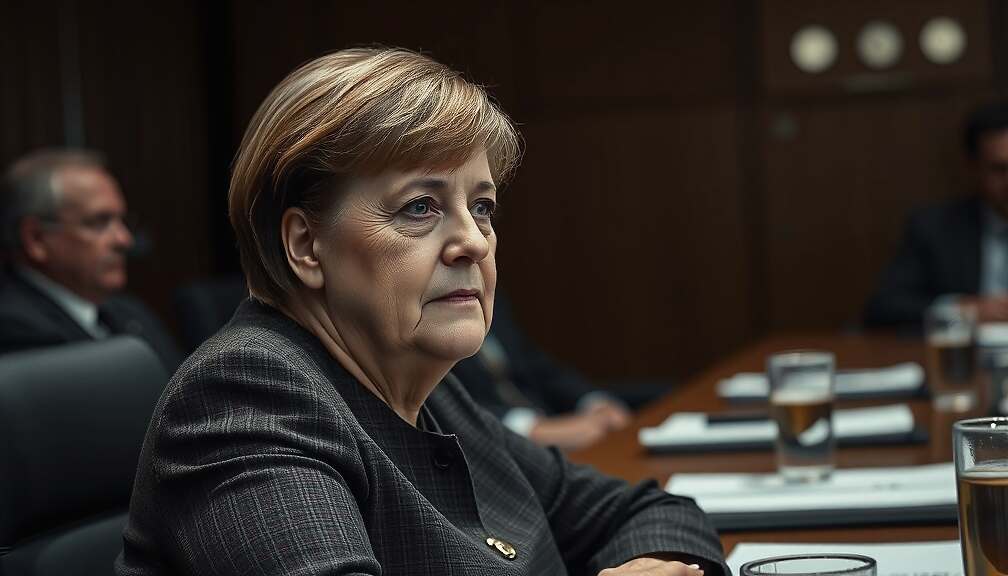
Former Chancellor Angela Merkel (CDU) has admitted shortcomings from her tenure, specifically addressing defense, digitalization, and climate policies.
According to an interview with the “Frankfurter Allgemeine Sonntagszeitung” (FAS), Merkel acknowledged that the growth of defense spending was too slow. While she does not agree that the Bundeswehr was entirely unprepared for Putin’s invasion of Ukraine, she noted that despite renewed increases in the defense budget since 2015-following a NATO goal set at the Wales summit to spend up to two percent of GDP on defense-she added, “Looking back, we were not fast enough.”
The former Chancellor was also highly self-critical regarding digitalization. She expressed deep dissatisfaction with the speed of Germany’s digital transformation, stating: “We had made much greater plans for this, but pushing it through is extremely difficult within our federal structures.” Wishing success to the current Digital Minister Karsten Wildberger (CDU), she concluded on this point: “It is truly difficult, and we were too slow here.”
Regarding climate policy, Merkel remarked: “I also engaged in very self-critical reflection regarding what we did in connection with climate protection. Did we live up to the precautionary principle? I cannot say that we have done enough compared to what is necessary.”
Merkel made it clear she has no intention of taking on another role. Telling the FAS, “Behind me lies a truly fulfilling political life. I do not possess the strength, dynamism, or curiosity for new offices.”
She dismissed rumors surrounding her potential future roles as mere “play games,” emphasizing that she does not appreciate such speculation. She said these occasional reports are “annoying play games” and added that one ought not to be ashamed if someone imagines them in a position like President, but that there is also a slight lack of seriousness. Discussions about the supreme state office should not be conducted this way.
Finally, Merkel refuted suggestions that she could mediate the Russian-Ukrainian conflict. Based on her experience, she stated that negotiating with Russian President Vladimir Putin requires political power granted by democratic mandates. Referring to her time as Chancellor, she pointed out that neither then-French President François Hollande nor she herself had requested anyone to conduct negotiations with Putin in Minsk on their behalf. She concluded that such matters remain the domain of those who possess legitimacy and power.