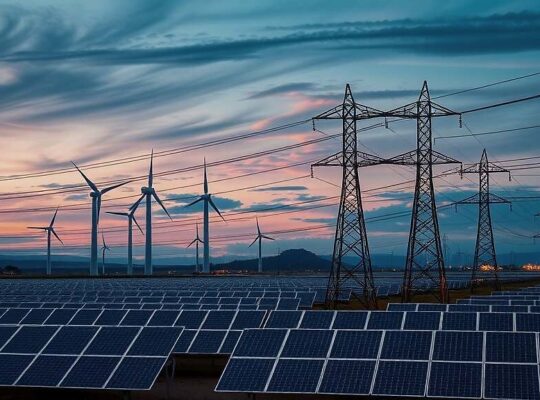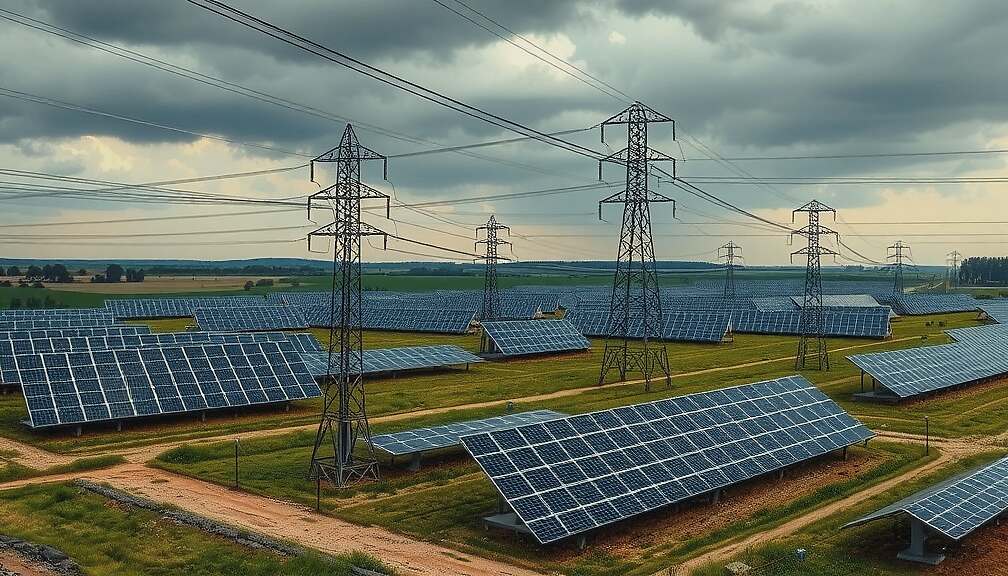
The German transmission system operator 50 Hertz has issued a warning against unchecked and excessive expansion of solar power production across the country. While the recent series of negative electricity prices in May suggests Germany is capable of generating affordable power from renewable sources-a point emphasized by 50-Hertz CEO Stefan Kapferer in an interview with ntv-Kapferer stressed that the current grid system is not yet prepared to handle such massive volumes of solar energy.
He cautioned that charging electricity prices involves more than just the cost of generation. “We must keep the system costs under control,” he explained, referring specifically to necessary network expansion and managing reactive power interventions (Redispatch). Consequently, Kapferer stated that for the next five or six years, priorities should be set around systemic stability rather than pursuing massive new solar farm installations.
It is important to note, however, that this warning applies primarily to solar deployment. The grid operator clarified that he is not calling for a slowdown in renewable energy development as a whole; instead, land-based and offshore wind power projects urgently require greater dynamism in their approval processes. The concern centers specifically on the current rate of increase in solar installations.
Kapferer provided regional examples to illustrate his points. In Brandenburg, which falls within 50 Hertz’s network area, renewable generation capacity stands at 17 gigawatts, while demand is only three gigawatts, meaning consistent energy export is necessary. While additional wind power would be needed there during sunless periods, solar growth alone does not solve this reliability gap.
In contrast, regions like North Rhine-Westphalia and Baden-Württemberg possess the industrial capacity to absorb greater amounts of electricity. Meanwhile, Berlin and Hamburg also have sufficient existing consumption to accommodate any new private or commercial solar installation.
Stefan Kapferer has served as CEO of 50 Hertz since 2019. The company is responsible for managing the electrical grid operations in Berlin, Hamburg, and throughout all Eastern German federal states.