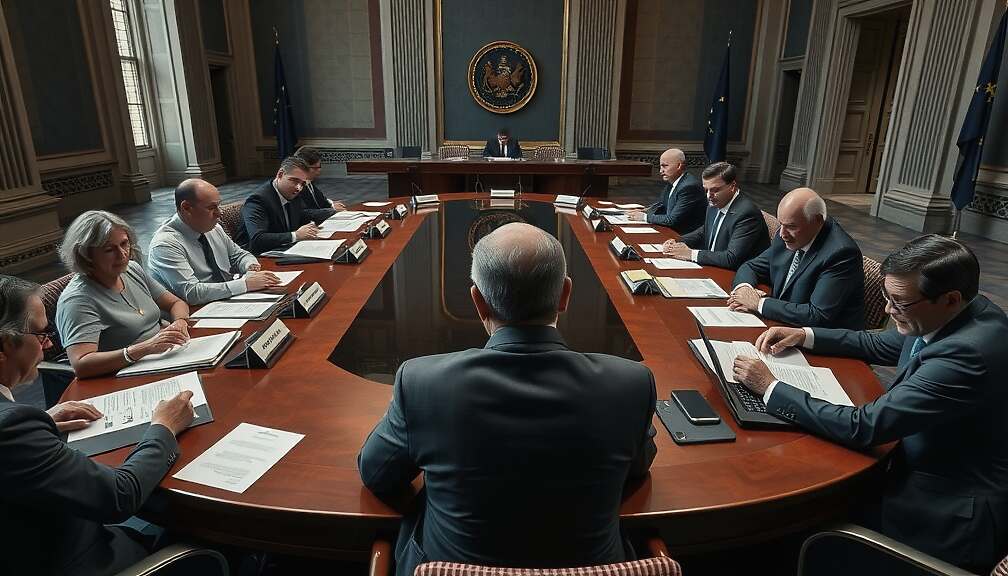
Discussions regarding the European Union’s next Multi-Annual Financial Framework (MFR) are entering a critical stage. Sources from the negotiation circles indicate that a special summit of heads of state and government scheduled for November could pave the way for a political agreement, with the goal of concluding the long-term EU budget by December 2026. Should this timeline not be met, an agreement may still be possible by mid-February, prior to the French presidential election in April 2027.
Germany, along with other net contributors, advocates for a strictly limited budget framework and strongly rejects additional joint borrowing. The German federal government has stated unequivocally that taking up further credit at the European level is “out of the question.” They insist that repayments for the debt accumulated during the COVID-19 pandemic must be covered by existing funds, arguing that new debt would undermine the credibility of the European Union.
The delicate financial situation of many member states is complicating these negotiations. Numerous national governments are highly indebted and possess limited flexibility for increasing their contributions. Simultaneously, the EU’s financial needs are growing across areas such as competitiveness, research, migration, and security.
A key point of disagreement involves the future distribution of financial burdens. While traditional recipient countries insist on maintaining access to cohesion and agricultural funds, net contributors call for stricter spending discipline. The German government emphasized that failure in the negotiations would be detrimental to all parties. While existing agricultural payments could continue without an agreement, new programs in areas like research, cohesion policy, or military cooperation would face stagnation.
An additional challenge is the repayment of the COVID-19 Recovery Fund. Negotiation sources report that significant long-term funding is lacking to cover the full debt retirement. Consequently, the European Commission is pushing for new own resources. France has shown a fundamental openness to this approach, though its specific position remains unclear.
The potential EU membership of Ukraine has, so far, played only a secondary role in the ongoing financial discussions. In most capitals, it is not expected that Ukraine will become an EU member within the next seven years, although Kyiv holds a differing view.
Aside from the budget, the EU Council also addressed trade relations with China this week. The German government continues to criticize distortions caused by Chinese subsidies and currency practices but seems committed to maintaining dialogue rather than confrontation. While stating that a trade war serves neither European nor Chinese interests, they emphasized that the EU must further develop its trade policy instruments to effectively respond to unfair competition.