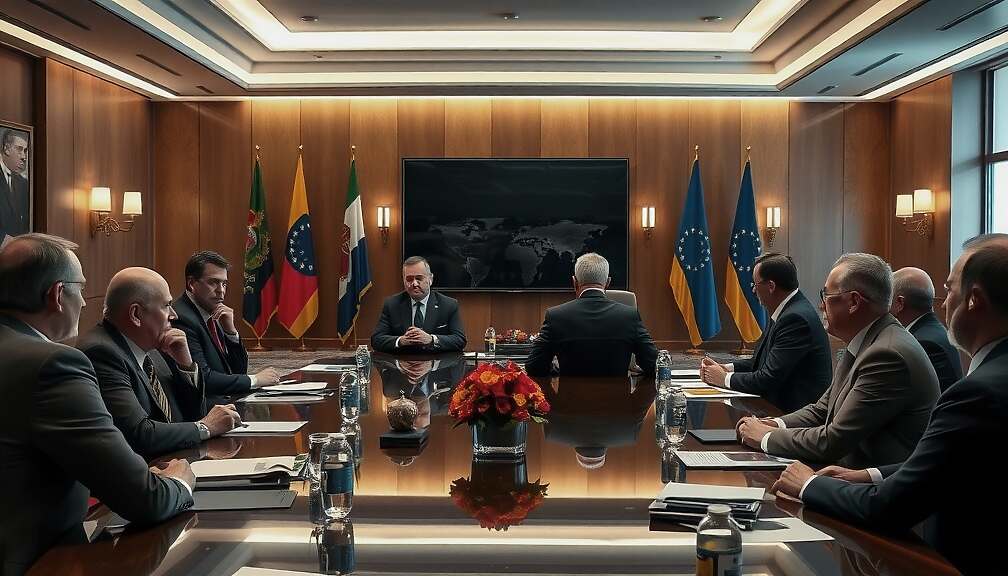
The outgoing High Representative for Bosnia and Herzegovina, CSU politician Christian Schmidt, is insisting that his successor must maintain extensive intervention powers within the country’s legislative framework. According to Schmidt, the reality in BiH sometimes demands a tough approach, stating in an interview with the “Tagesspiegel” that progress cannot be achieved based on the principles of a round table alone.
Schmidt asserted that he has learned that balancing incentives with sanctions sometimes requires leaning more heavily on the “stick.” He used this commentary to criticize separatist efforts by Bosnian-Serb politicians, which he claims to have successfully thwarted using his inherent powers. He stressed that these powers are necessary for his successor as long as Bosnian politicians fail to demonstrate a genuine will towards national legislation. For him, democratic self-determination can only function once the revanchism among ethnic groups is overcome and truly free and fair elections are held.
Schmidt announced his resignation in May, citing clear expectations from the US government that he conclude his mandate. He complied with this pressure because he felt the Dayton Peace Agreement of 1995-which ended the fighting between Serbs, Bosniaks, and Croats-was endangered. He stated, “I offered my head on a silver platter so that the institutions created by the Dayton Peace Agreement would survive.”
The identity of his successor remains unclear, as the international community has yet to agree on a replacement. In the interim, US diplomat and Schmidt’s previous substitute, Louis Crishock, is serving in the role. Critically, Schmidt’s successor will require the backing of all EU states, which was not always guaranteed. Furthermore, the strong backing of the United States for the office in the future is no longer certain.
Previously, a conflict arose between the US government and Schmidt regarding a proposed pipeline intended to transport liquefied natural gas from Croatia to Bosnia and Herzegovina. The pipeline route traverses territory that was formerly part of Yugoslavia, and its ownership status remains unsettled. This ambiguity is currently blocking the construction project. Schmidt maintained that he intended to resolve this issue in a legally impeccable and transparent manner, but he found a lack of necessary political will.