In July 2026, Germany experienced a pronounced gradient in temperature, rainfall, and sunshine hours, moving strikingly from southwest to northeast. According to the German Weather Service (DWD), the southwest and western regions of the country were significantly warmer, drier, and sunnier than the long-term average. While the northeast also recorded elevated temperatures and less precipitation than usual, its maximum values did not reach the level achieved in the southwest.
Although the month began with moderate temperatures, they rose steadily to a high level. At the end of the month, the average temperature reached 19.7 degrees Celsius, marking a rise of 2.8 degrees above the international reference period of 1961 to 1990. Even when comparing this figure to the more recent and warmer period of 1991 to 2020 (which averaged 18.3°C), the July temperatures were 1.4 degrees higher. A particularly notable event was the heatwave toward the end of the month. Despite the high daytime temperatures, nightly lows in the southwest often dropped below 20 degrees Celsius, which slightly mitigated the heat stress.
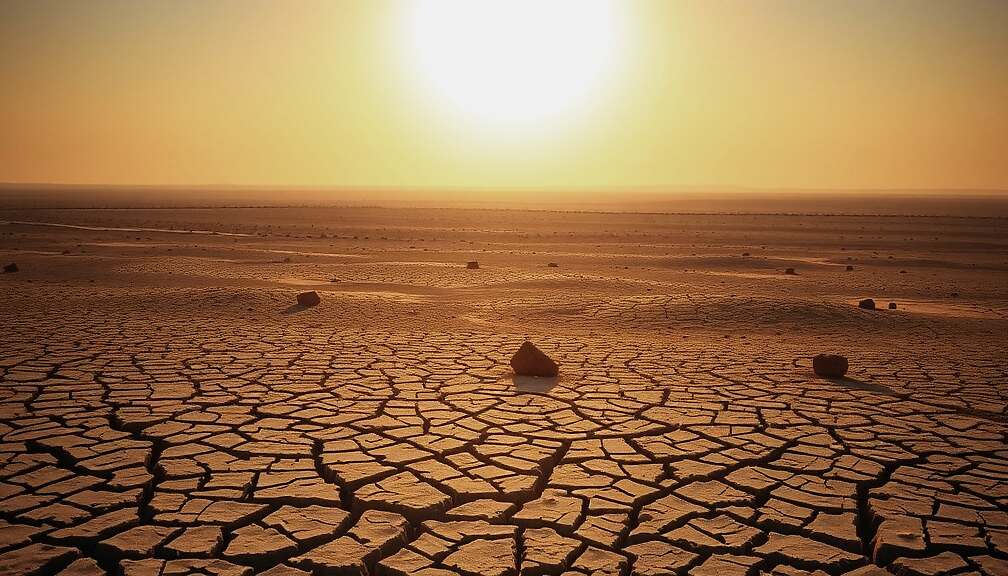
Low rainfall was particularly noticeable across southwestern and western Germany. These regions registered only about 40 liters per square meter of precipitation, which was roughly half of the long-term average recorded during 1961 to 1990 (78 l/m²). This deficit grew even more pronounced when compared to the more recent and wetter reference period of 1991 to 2020 (87 l/m²). The resulting drought contributed to a high risk of forest fires, low water levels, and reduced yields in the grain harvest. However, thunderstorms bringing heavy rainfall were insufficient to compensate for the overall dryness.
Furthermore, Germany saw an unusually high number of sunshine hours across the country (272 hours). This represented an increase of about 30 percent compared to the period of 1961 to 1990 (211 hours). The increase compared to the more recent reference period (1991 to 2020), which recorded 226 hours, was slightly less significant, registering only 46 more hours-roughly a fifth of the reference value. Regional conditions in the southwest were exceptional, with some areas recording 325 to 350 sunshine hours, averaging between eleven and twelve hours daily.