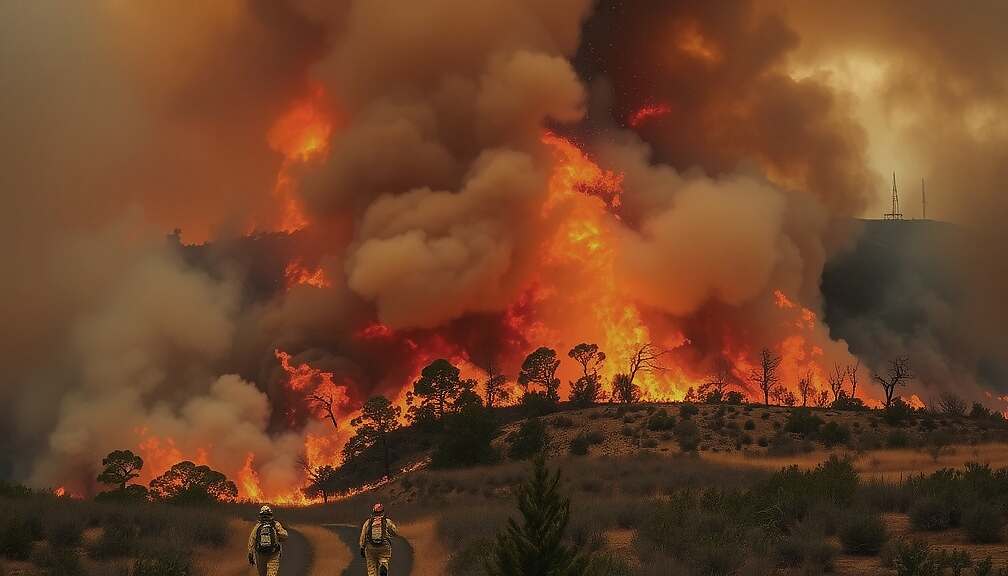
The Greens in the Bundestag are demanding increased governmental action against forest fires in Germany, especially in light of the devastating blazes witnessed in Southern Europe. Speaking to Funke-Mediengruppe newspapers, parliamentary group leader Britta Haßelmann stated that since hundreds of thousands of people were forced to flee the flames in Spain and France, anyone who believes such images are absent in Germany misunderstands the reality of the climate crisis. She argued that the heatwaves of this summer demonstrated that the risk of forest fires is rising even in Germany, asserting that the Federal Government and Chancellor Friedrich Merz must take decisive action rather than downplaying the climate crisis.
In a document quoted by Funke-Mediengruppe, Haßelmann, alongside Greens members Julia Verlinden, Niklas Wagener, Julia Schneider, and Leon Eckert, calls for several key policy changes. These include establishing a comprehensive national fire management strategy. This strategy must look beyond merely combating existing fires; it should incorporate risk analysis, prevention, and deployment preparation, as well as the eventual restoration of burnt areas.
The politicians further urged the implementation of more modern technology. The document specifies that fires could be quickly identified using drones and satellite imagery and tackled swiftly using specialized aircraft and fire fighting vehicles. To support this area of research and consultation, the Federal Government is tasked with establishing a practical “Forest Climate Fund 2.0.” This is intended to succeed the original Forest Climate Fund, which focused on aiding the adaptation of forests to climate change but expired in 2022.
Additionally, the Bundestag Greens are requesting better equipment for firefighters, dedicating 50 million euros to a forest development program, expanding the Natural Climate Protection Action Plan, and increasing public education regarding forest fires. Haßelmann concluded that the best forest protection begins long before the first spark, underscoring that modern forest protection is simultaneously an issue of climate, nature, and public safety.