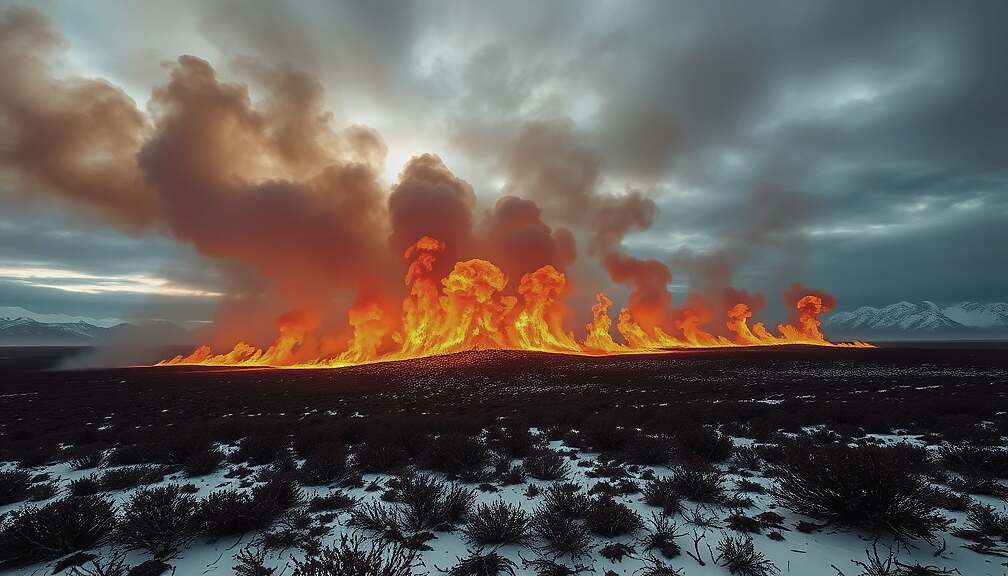
A study led by the University of Zurich found that the frequency of fires in the Arctic has more than doubled in areas where human activity is present. Between 2001 and 2013, fires in these cultivated areas occurred 2.5 times more often compared to similar climatic regions without human influence. To identify human presence, the researchers utilized the presence of artificial nocturnal light as an indicator.
The study highlights a strong connection between the occurrence of fires and illuminated regions across the Arctic. While the researchers cautioned that human activities are not the sole ignition source for Arctic fires-noting that changing temperature, humidity, and drought conditions also remain critical factors-they stressed that the human element plays a major role.
These findings are significant for Arctic inhabitants, as fires pose severe threats not only to infrastructure but also to local ways of life and the unique Arctic biodiversity. Consequently, the researchers emphasized the urgent need to integrate fire prevention strategies into both regional planning and industrial practices to effectively mitigate these risks.