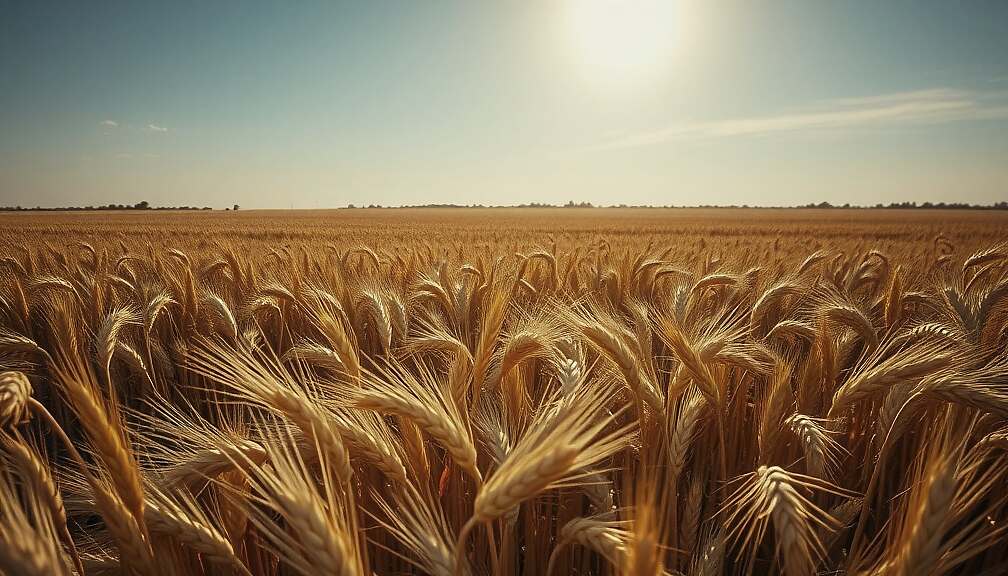
The prolonged heatwave has severely impacted the German grain harvest of 2026. According to the German Raiffeisen Association (DRV), approximately three million tons of grain and rapeseed were lost since mid-June due to the high temperatures. These losses translate into financial damages exceeding 600 million euros, based on the association’s calculations.
The DRV anticipates a grain yield of 40.6 million tons, which is more than ten percent below last year’s figure of about 45 million tons. Similarly, the rapeseed harvest is expected to be significantly lower, forecast at 3.7 million tons compared to 4.0 million tons the previous year.
Despite the below-average crop yield, the DRV currently sees no reason to worry about the domestic supply of grain. Germany’s annual grain consumption is around 40 million tons, which this year’s harvest will satisfy. Consequently, the DRV does not expect rising consumer prices for baked goods, as grain constitutes only a low percentage of the final cost. Instead, higher operational costs related to energy, labor, and bureaucracy are seen as the primary factors influencing pricing.
Globally, supply conditions remain strained, as lower harvests are not limited to Germany but are also occurring across Europe and worldwide. Given geopolitical tensions, such as the war in Ukraine, supply balances are tenuous. In the coming months, logistics will be crucial for ensuring supply security, as geopolitical crises and low water levels on waterways threaten to disrupt transport chains. The DRV is appealing to policymakers to expand infrastructure to guarantee supply security.
Notably, the strong rise in global fertilizer prices back in 2026 did not limit the current harvest, as farmers had strategically applied their fertilizer stock before the conflicts in the Middle East intensified. However, the association remains worried about the 2027 harvest: due to the sharp increase in prices, many farmers are currently hesitant to purchase nitrogen fertilizers, hoping for a reduction in costs.