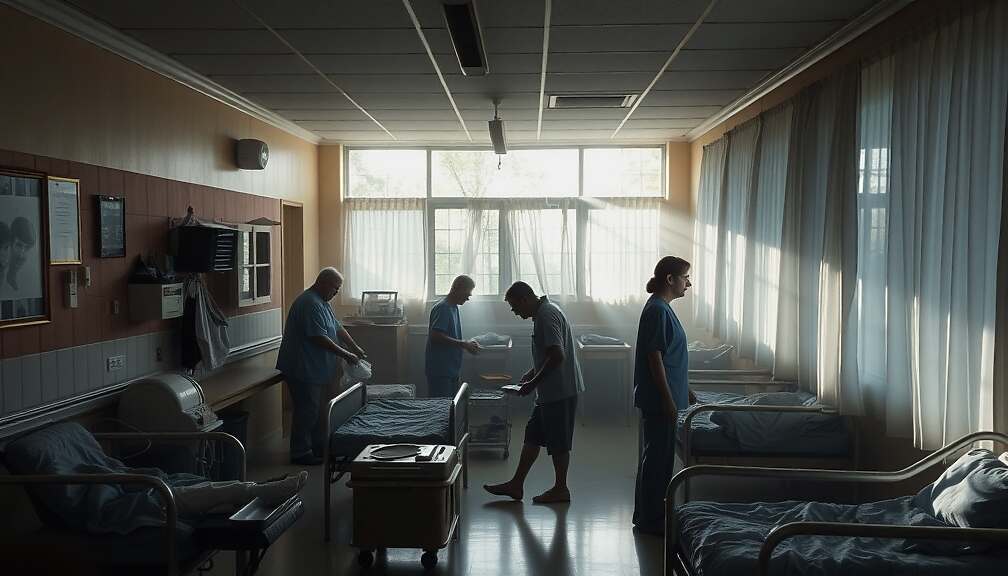
Survey results from the union Verdi, involving 321 caregivers and staff in nursing facilities, indicate that temperatures this summer have reached levels that violate work safety laws and pose significant health risks. The newspapers of the Funke media group reported on the findings, which collected 801 temperature measurements between July 30 and August 10. In some cases, temperatures spiked as high as 45 degrees Celsius. The average temperatures were around 28 to 30 degrees during the day, 25 degrees in the early morning (6 to 8 AM), and 26 degrees during the early hours of the night (1 to 3 AM).
According to German occupational safety regulations, countermeasures must be implemented when room temperatures reach 30 degrees Celsius, and a room is considered unsuitable as a workspace above 35 degrees. Verdi revealed that 40.9 percent of the staff who submitted measurements recorded at least one temperature above 30 degrees, while 12.8 percent reported at least one measurement above 35 degrees. When asked to rate the discomfort caused by the heat on a scale of 1 to 10 (10 being extremely burdensome), the employees averaged an 8.2, with the median score at 9.
The impact on residents is described as serious. Staff reported that 11 percent of the facilities recorded instances of circulatory collapses among residents, 10 percent reported cases of dehydration, and 9 percent attributed deaths to the heat.
Sylvia Bühler, a member of the Verdi federal executive board, stated to the Funke newspapers that the employee reports revealed “terrifying conditions.” She stressed that temperatures up to 45 degrees in some nursing homes are unbearable for staff and potentially life-threatening for residents. She called on the federal and state governments to urgently establish a rapid action program for heat protection and energy-efficient renovation of care facilities. Bühler also argued that adequate state funding for these investments would lower the substantial costs currently borne by residents, which often places them under severe financial strain.
Furthermore, Bühler criticized the already inadequate staffing levels, stating that these structures completely collapse during periods of heat. She noted that staff frequently experience health-related absences, while simultaneously needing to take additional measures to protect residents. Such measures, she emphasized, require time and thus more personnel. She finds it alarming that caregivers are still often required to work alone shifts, especially at night.
She concluded that having just one care professional responsible for 100 or more residents is clearly unacceptable, making professional care impossible. She believes that the federal government must fundamentally revise its plans for the nursing insurance system. Instead of implementing cuts, the necessary steps involve establishing demand-appropriate guidelines for staffing levels, which must be fully financed by the state.