The EU plans to significantly broaden its sanctions against Russia in the coming months. “In autumn, I will present the most extensive sanctions list since the start of the war. If it is adopted, the number of sanctioned Russian individuals, companies, and organizations will increase immediately by one third. The pressure must be intensified until Russia ends the war,” said EU External Affairs Commissioner Kaja Kallas to the newspaper.
The former Prime Minister of Estonia also expressed hope that the United States and Europe would “move closer together” regarding the sanctions. Kallas characterized the 21 sanction packages issued since the start of the conflict in February 2022 as successful, noting that “Russia has paid dearly for the EU sanctions; they have cost Russia’s war machine over one billion euros.”
Simultaneously, Kallas accused Moscow of “systematic terror,” stating that the Russian army is failing on the battlefield and is therefore increasingly directing rockets against Ukrainian civilians and infrastructure. She termed these actions as systematic terror, arguing that Russia seeks to make Ukrainian cities uninhabitable.
Turning to the Middle East, Kallas reaffirmed that Europeans remain committed to the two-state solution. She stressed that the two-state model remains the only viable long-term solution to the conflict between Israel and the Palestinians, allowing for safe coexistence for both sides. She added that efforts are underway to keep this prospect alive, with two recently extended EU missions on the ground helping to achieve this goal.
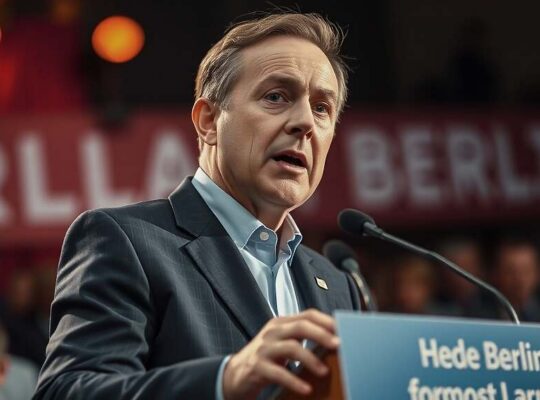
Regarding calls from Berlin and Paris to reform the European External Action Service (EEAS), which Kallas directs, the chief diplomat stated: “Today’s crises require faster decisions, which applies to Ukraine as well as the Middle East. I share the view of France and Germany that Europe needs a more powerful presence in foreign policy, and I am working to make that happen.” Kallas called for the dismantling of “double structures” between EU institutions and better alignment of Europe’s instruments in the interest of the continent. This streamlining should cover diplomacy, trade, and development aid. “We must also make the EU’s diplomatic service more effective. I plan to discuss this with the Foreign Ministers in September.”