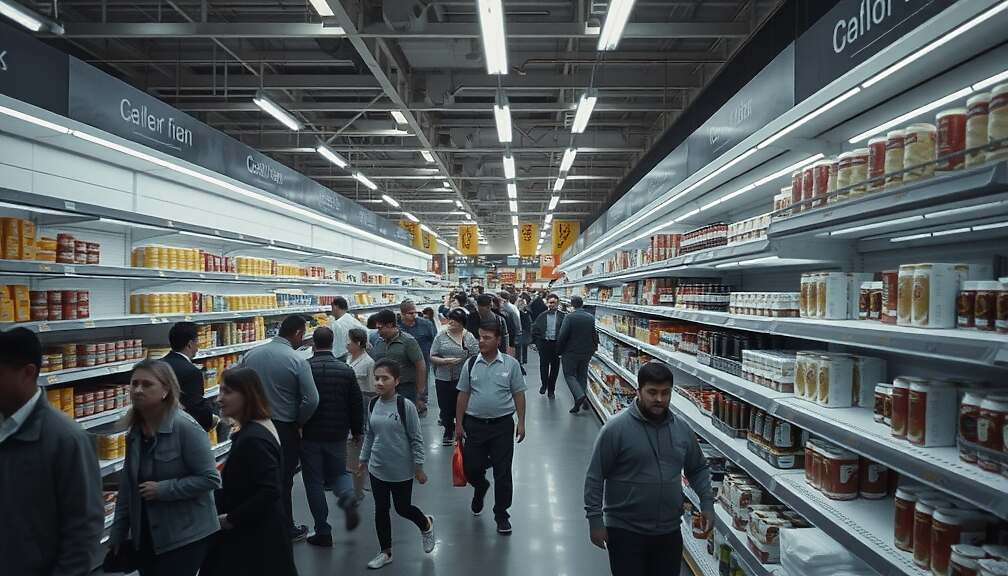
Shoppers in supermarkets and other retail outlets may soon face the possibility of larger-scale strikes. The union Verdi is threatening to significantly broaden the labor conflict within the retail sector, according to reporting by the “Süddeutsche Zeitung”.
The backdrop to this escalation is the wage negotiation round, which began in April and has so far failed to yield any results despite numerous meetings. According to Verdi board member Silke Zimmer, if employers do not concede over the coming weeks, the union will intensify its strike actions, noting that multi-day work stoppages are conceivable. These measures would specifically target companies that are blocking the negotiations.
Verdi is demanding a 7% pay increase for employees, establishing a minimum hourly wage of at least €14.90. The union estimates that roughly a quarter of the more than three million retail workers are directly affected by the collective agreement. Verdi cites rising prices over the past years and the recent increase in fuel costs following the conflict between the US and Iran as key justifications for its demand. Economists predict inflation will rise to around three percent this year, following a jump to 2.8 percent compared to the previous year in July.
However, sources from the SZ indicate that the employers recently offered a pay increase of 4.4% to the union. Steven Haarke, the trade union director for the Handelsverband Deutschland (HDE), stated before the negotiations began that there was little room for maneuver. Under the current conditions, Verdi’s demands are, according to the HDE, disconnected from the reality of many retail companies.
A specific point of contention revolves around the working conditions of younger employees. The employers’ offer is criticized by Verdi as being so low that, in certain regions, the salaries would functionally only reach the level of the statutory minimum wage that the federal government plans to raise from the current €13.90 to €14.60 per hour by January 1, 2027. Zimmer called this a scandal, arguing that most retail employees have completed vocational training and deserve more respect than just the minimum wage. The HDE, conversely, argues that through the factoring in of holiday and Christmas bonuses, tariff employees already receive an entry-level salary significantly above the minimum wage set for next year, which will be €14.60 per hour.