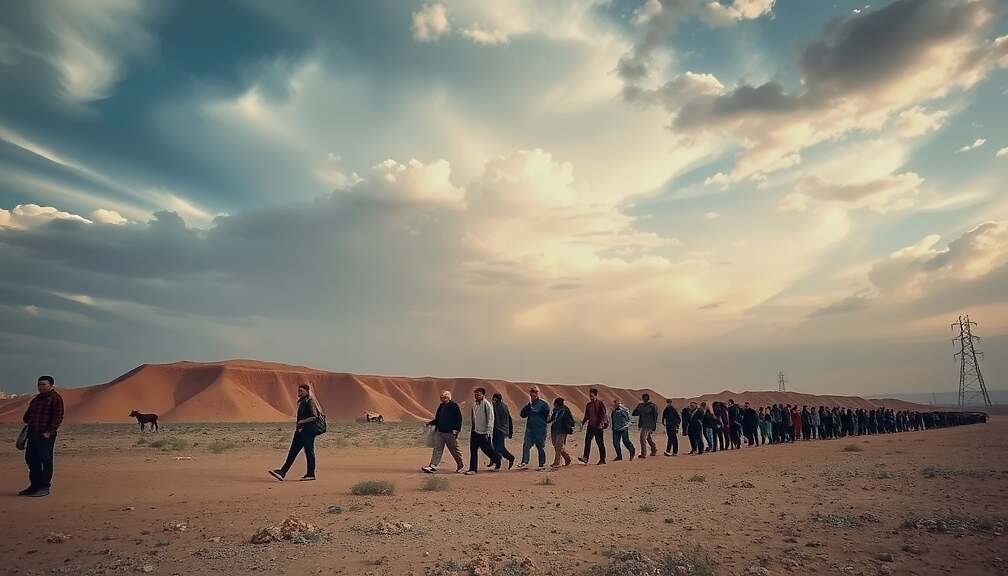
According to the UN Refugee Agency (UNHCR), a sustainable return for people who fled Lebanon before the recent conflicts is not currently possible. Karolina Lindholm Billing, the UNHCR representative in Lebanon, told Redaktionsnetzwerk Deutschland that the necessary prerequisites for such a sustainable return have not yet been met, noting that the situation remains extremely unstable due to daily breaches of the ceasefire with Israel and new attacks.
During the peak of the fighting in mid-April, UNHCR reported that over one million people were displaced in Lebanon. While 865,000 have since returned to their areas of origin or are on the way back, many of them have not been able to return to their original homes.
The situation in South Lebanon is particularly challenging. In areas like Bint Dschubail, virtually all houses are destroyed or damaged, and entire streets are deserted. Lebanon still hosts more than 160 collective shelters for internally displaced people, many of which are in schools. The UNHCR representative emphasized that there is no guarantee of safety in these shelters, adding that during the escalation, many schools and hospitals have also been attacked, damaged, or destroyed.
The number of displaced persons and returnees is fluid due to the volatile circumstances. Despite the risks, many individuals are determined to return to their home villages, accepting life in temporary accommodations to achieve this.
Furthermore, since the fall of Syrian ruler Bashar al-Assad, approximately 132,000 individuals belonging to various local minorities, including Alawites, Shiites, Druze, and Christians, have fled to Lebanon, naming the security situation as their primary concern.
Simultaneously, numerous Syrian refugees continue to return from Lebanon to Syria. UNHCR data indicates that more than 681,000 Syrians have been registered as returnees. However, Ms. Lindholm Billing pointed out that the intention to return has recently stalled, stating: “Many still lack the confidence that they can return permanently and sustainably.” Some individuals, having returned due to destroyed homes and lack of employment opportunities, have gone irregularly back to Lebanon and are now living without legal permits or in government registries.
This UNHCR assessment comes amidst an intense debate in Germany regarding the return of Syrian refugees. The German government is advocating for stronger voluntary returns and is commencing deportations, particularly of criminals. Conversely, the UNHCR continues to stress the absence of the necessary conditions for a safe and sustainable return.