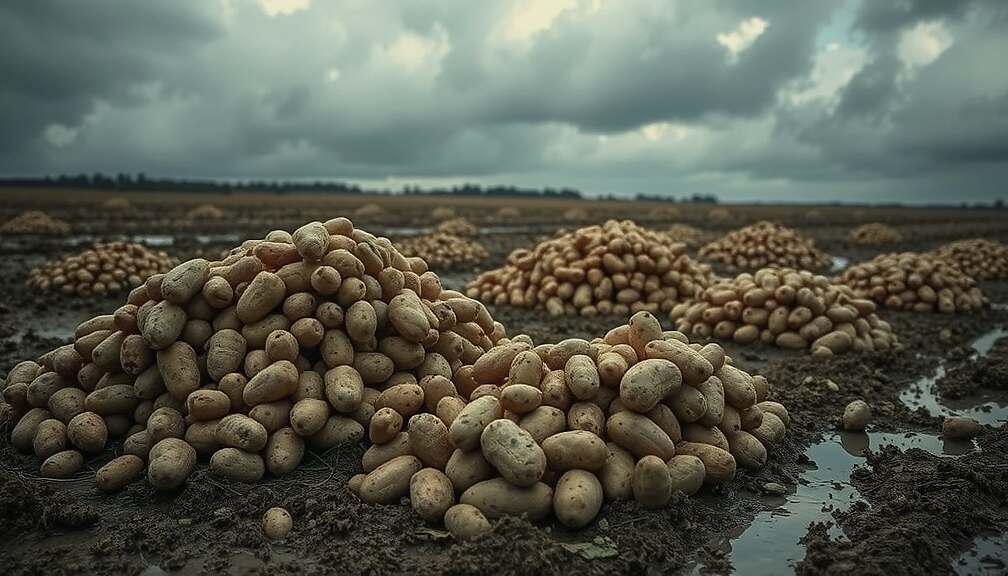
Preliminary data indicates that the potato harvest in Germany in 2026 will be significantly smaller than the previous year, which is having consequences across various levels of the economy. This reduction is linked to a predicted drop of nearly a quarter, reaching 10.4 million tonnes, compared to the 13.9 million tonnes harvested the previous year.
This decline stems not only from a reduction in cultivated area, which has decreased by 11.1 percent to 268,300 hectares (down from 301,800 hectares in 2025), but also from lower per-hectare yields. For 2026, a yield of 38.9 tonnes per hectare is expected, a 15.4 percent decrease from the 46.0 tonnes per hectare recorded in 2025. This is primarily attributed to the extreme heat and drought experienced this summer.
On the price front, the effects are differentiated by product stage. In September 2026, consumers paid 11.3 percent more for fresh potatoes compared to the previous month, according to data from the Federal Statistical Office (Destatis). However, prices for processed potato products, such as chips and similar items, dropped by 4.7 percent against the prior month. Overall consumer prices rose by 3.3 percent in September 2026, with foodstuffs in total increasing by 0.4 percent.
The rise in the price of fresh potatoes is linked to steep increases in the preceding stages. Producer prices for potatoes rose by 61.5 percent in August 2026 compared to August of the previous year. This marks the strongest increase in potato producer prices over the past three years (following a surge of 114.6 percent from August 2022 to August 2023). While producer prices for agricultural products overall fell by 7.0 percent in August 2026 compared to August 2025, producer prices for plant products did rise by 12.3 percent.
It should be noted that while Germany produces more potatoes than domestically required, a large portion of the crop is exported. According to preliminary figures from the Federal Institute of Agriculture and Food (BLE), the country’s self-sufficiency rate for potatoes stood at 145 percent during the 2024/25 economic year.