Several economists believe that Germany is heading toward a profound budget crisis. Clemens Fuest, president of the Ifo-Institut München, told Welt am Sonntag that the current fiscal policy cannot be sustained indefinitely. He stated that the black-red coalition must define priorities for the 2028 federal budget, such as defense and infrastructure. Fuest urged that all other spending should be frozen or cut if possible. He added that if the coalition is unwilling to make these cuts, tax increases will be unavoidable, suggesting that a value-added tax increase would be the least detrimental solution for growth.
Achim Wambach, president of the Leibniz-Zentrum für Europäische Wirtschaftspolitik (ZEW), believes the situation post-2028 is more serious than the cyclical recovery suggests. He noted that interest rates are above the economic growth rate, meaning the state cannot grow out of its debt. Wambach identified the reform of social security as a pressing task, alongside the urgent need to reduce expenditures. Non-growth-boosting subsidies must be eliminated, he said. Regarding a value-added tax increase, Wambach expressed openness if it were paired with cuts in income taxes and levies, thereby relieving the burden on the labor force. He stated that this could be economically justified.
Jens Boysen-Hogrefe from the Institut für Weltwirtschaft in Kiel drew a similarly bleak picture. He acknowledged that cyclical fluctuations and special effects might allow for breathing room in some years, but stressed that the overall trend is clearly negative. He attributed this trend to the aging population coinciding with rising interest expenditures. He predicted that additional levies are likely even with strict spending discipline. While he supported a higher value-added tax because it is relatively profitable and spares the export industry, he cautioned that it alone cannot solve the budget problems. Besides raising the sales tax, Boysen-Hogrefe introduced the concept of a car toll and changes to the inheritance tax, arguing this is preferable to placing the burden solely on the working population through higher social security contributions or gradual inflation.
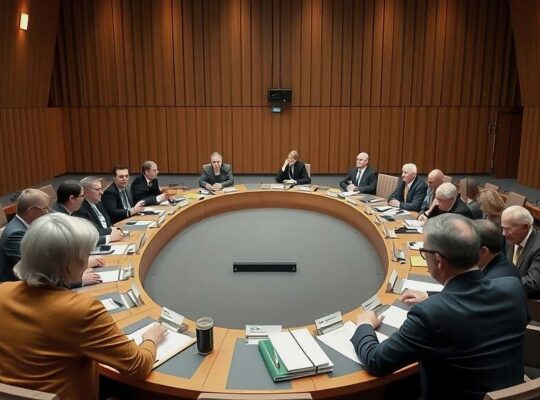
Late on Friday, the Budget Committee approved the federal budget for 2027 after nearly 16 hours of negotiations. Core budget expenditures rise to a record 561 billion euros. The planned total new debt of 210 billion euros is the second highest in the history of the Federal Republic.