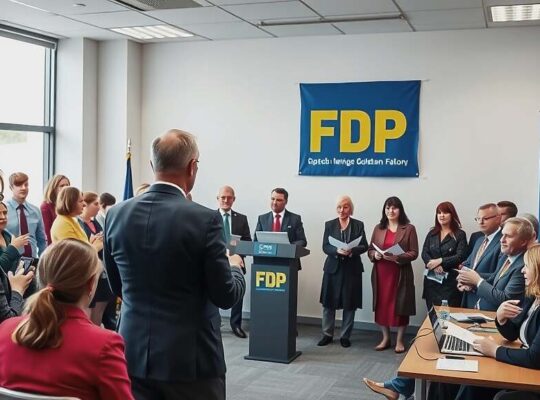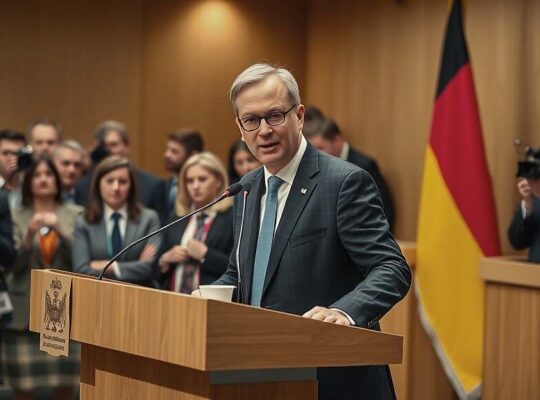
Internal divisions within Germany’s Alternative for Germany (AfD) party have erupted into a formal disciplinary process, signaling a deepening rift over the party’s ideological direction and public messaging. According to reports from “Welt”, AfD parliamentary group leaders are moving to sanction MP Rüdiger Lucassen for publicly criticizing Thuringia’s state leader, Björn Höcke, during a recent Bundestag debate.
The incident stems from Lucassen’s December speech on compulsory military service, in which he directly referenced Höcke’s recent assertion that Germany was no longer worth fighting for. Lucassen’s challenge of this statement, framing it as a betrayal of earlier generations, triggered immediate condemnation from the AfD leadership, who view it as a deliberate attempt to destabilize the party’s internal cohesion.
The parliamentary group’s board, composed of Alice Weidel and Tino Chrupalla, formally initiated disciplinary proceedings against Lucassen on Monday, citing a violation of the party’s internal rules of conduct. These rules allow for a range of penalties, from a formal reprimand – the proposed measure in Lucassen’s case – to fines, speaking bans, denial of parliamentary positions and even expulsion from the faction.
However, the driving force behind the proceedings isn’t ostensibly about the substance of Lucassen’s disagreement with Höcke. A letter obtained by “Welt” indicates that the leadership views Lucassen’s transgression as the act of publicly airing an ongoing and sensitive internal debate. They argue that his actions were deliberately provocative and guaranteed to generate negative press coverage, thus damaging the party’s image and undermining its strategic objectives.
This internal conflict highlights the persistent struggle between more moderate and hardline factions within the AfD. Höcke, a figure known for his far-right views and controversial statements, represents a nationalist wing that enjoys significant support within the party base. Lucassen’s critique, while seemingly a defense of national pride, has been interpreted by the leadership as an insubordinate challenge to the party’s established hierarchy and public stance.
Lucassen is now afforded until Friday to present his defense. A final decision regarding disciplinary action will then be made by the party leadership in January. The unfolding situation offers a stark illustration of the challenges facing the AfD as it navigates internal ideological tensions and grapples with the ramifications of its increasingly outspoken political positions. The resolution of this dispute will likely shape the future direction and public image of the party in the coming months.