Analysis of Bundestag’s Escalating Behavioral Issues
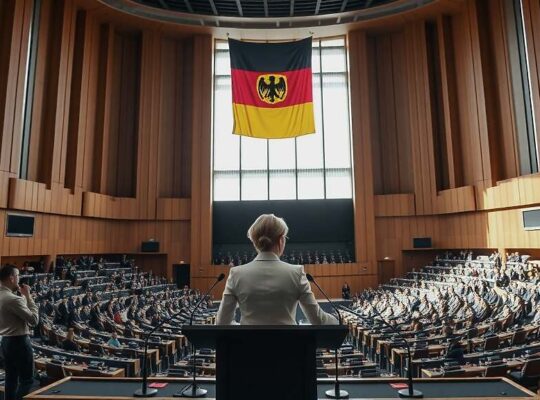
The German Bundestag has witnessed a significant rise in disciplinary interventions since the commencement of the current legislative period on May 12th, raising concerns about parliamentary decorum and the increasing polarization of the political landscape.. According to data compiled and reported by “Bild”, a remarkable 42 formal calls to order have been issued, a figure signaling a trend of escalating disruption within the parliamentary chamber.
The vast majority of these reprimands – 35 – have been directed at members of the Alternative for Germany (AfD) party, while a further seven have been levied against representatives of the Left party (Die Linke). This disproportionate distribution points to potential challenges in integrating certain factions into established parliamentary norms and a possibility of strategically deployed disruptive tactics.
A closer examination reveals individual parliamentarians consistently flagged for their conduct. AfD members Martin Reichardt and Stephan Brandner have accumulated the highest number of calls to order, with seven and four respectively. Luigi Pantisano of the Left party also faces significant scrutiny, having received four formal reprimands. Other AfD politicians, including Kay Gottschalk, Steffen Janich, Stefan Keuter, Markus Frohnmaier and Carolin Bachmann, have also been repeatedly identified for behaviors necessitating intervention. Notably, the data reveals that no members of the governing coalition – comprising the Christian Democratic Union (CDU), the Social Democratic Party (SPD) and the Green Party – have received such disciplinary action.
While 42 calls to order within a relatively short legislative period is concerning, it’s worth noting that the 20th parliamentary session as a whole has seen a total of 136 such interventions. However, the current rate and the apparent concentration of reprimands within specific political groups, prompts a critical reflection on the challenges facing the Bundestag.
The pattern suggests a potential strategy employed by certain factions to leverage disruption for attention and to challenge the established order. While parliamentary debate should undoubtedly be robust and challenging, the frequency of these calls to order raises serious questions about the functionality of parliamentary procedure and whether established rules are being deliberately undermined. The lack of any disciplinary action against members of the governing coalition further fuels speculation about potential double standards and the politicization of parliamentary decorum. A more comprehensive analysis, beyond mere numerical data, is needed to understand the underlying motivations and consequences of this troubling trend, impacting the Bundestag’s ability to effectively fulfill its legislative role.