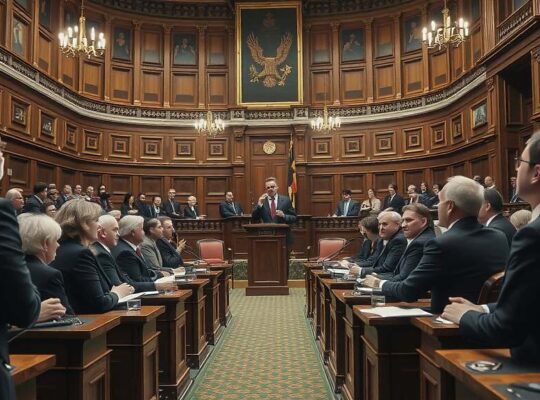
The Alternative for Germany (AfD), currently riding high in opinion polls ahead of the upcoming state election in Saxony-Anhalt, is outlining a radical restructuring of the regional government, raising serious concerns about potential democratic erosion and policy reversals. Ulrich Siegmund, the AfD’s top candidate and a potential future Minister-President, has signaled an intent to drastically reduce the size of the Landesregierung (state government) through the elimination and consolidation of ministerial portfolios.
Speaking to “Der Spiegel”, Siegmund proposed the dismantling of one to two ministries, ostensibly for efficiency reasons, while simultaneously promising staff cuts across state agencies. Notably, he declared the Landesenergieagentur, a body responsible for promoting energy efficiency and resource conservation, as “unnecessary” signaling a potential shift away from environmental protection initiatives.
Beyond administrative streamlining, Siegmund’s plans extend to a deeply concerning overhaul of public broadcasting. He envisions replacing the current network of public broadcasters with a mere two outlets, imposing a strict content mandate forbidding any expression beyond “factual” reporting. This proposal has been widely criticized as a blatant attempt to stifle independent journalism and political dissent, effectively creating a state-controlled information apparatus.
Siegmund’s vision extends beyond Saxony-Anhalt, reflecting a wider ambition to fundamentally reshape Germany. Previous pronouncements have included plans to abolish compulsory schooling in its current form and to implement what he described as a “sifting” process among migrants, language that has drawn comparisons to historical discriminatory practices. He framed these ambitions as a project to “turn the entire country upside down.
While Siegmund has offered limited specifics, stating that detailed policy plans are currently under discussion within AfD committees, the scope of his proposals already generates intense political scrutiny. The AfD’s current polling figures, hovering around 40%, give Siegmund a realistic chance of becoming Minister-President, a prospect that has triggered alarms within mainstream political parties and civil society organizations. The potential ascendancy of a leader advocating such sweeping and potentially authoritarian reforms poses a significant challenge to Germany’s democratic principles and underscores the urgency of addressing the rising tide of right-wing populism. Critics argue Siegmund’s initiatives target areas key to a functioning liberal democracy and suggest a deliberate strategy to dismantle established institutions and consolidate power, rather than address genuine issues of governance.