US Markets Rally Driven by Nvidia Surge, Masks Underlying Economic Concerns
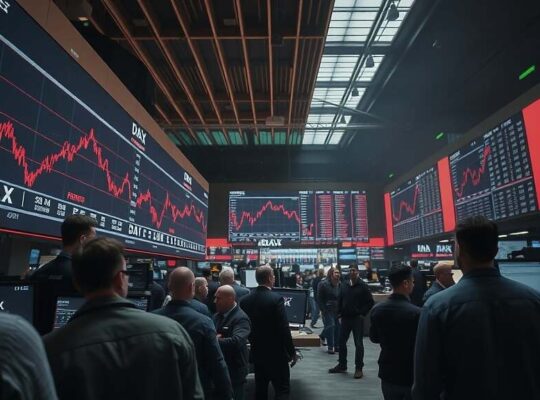
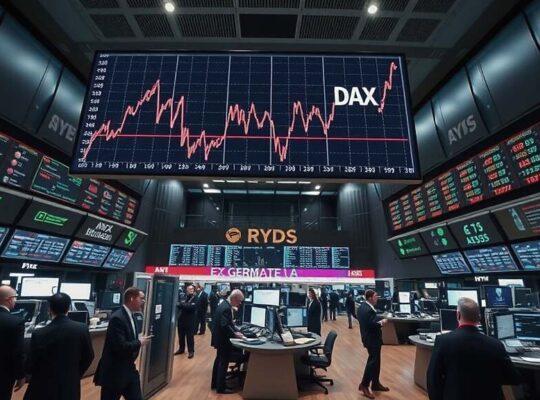
New York – US stock markets experienced a significant rally on Tuesday, fueled primarily by renewed investor enthusiasm surrounding Nvidia and overshadowing broader anxieties about the global economic outlook. The Dow Jones Industrial Average closed at 49,462 points, a 1.0% increase, while the S&P 500 reached approximately 6,945 points, up 0.6% and the Nasdaq 100 climbed to around 25,640 points, marking a 0.9% gain.
The buoyancy stems largely from Nvidia’s performance, bolstering a previously pressured artificial intelligence sector. Christine Romar, Head of Europe at CMC Markets, noted that Nvidia’s initiatives – including a partnership venture into autonomous driving and the anticipated release of the “Rubin” chip generation – have temporarily quelled concerns regarding inflated valuations. However, she cautioned that the market’s enthusiasm will face a critical test with upcoming quarterly earnings reports and corporate guidance. The reliance on a single company to drive market optimism raises questions about the sustainability of this trend.
The dollar strengthened against the euro, with the euro trading at $1.1691, reflecting a perceived divergence in economic sentiment. While a stronger dollar can benefit US exporters, it simultaneously complicates the export strategies of European companies and contributes to global trade imbalances. The movement also underscores the ongoing fragility of the Eurozone economy.
Gold prices saw a boost, reaching $4,489 per fine ounce (+1%), potentially fueled by investors seeking a haven asset amidst persistent uncertainty. This upward trend highlights a lingering lack of confidence in traditional risk assets, even as equities rise.
Conversely, oil prices plummeted, with Brent crude falling to $60.55 a barrel, a 2.0% decrease. This decline, while reflecting current supply and demand dynamics, also points to concerns about weakening global demand and potentially exacerbates inflationary pressures elsewhere. The volatility in energy markets underscores the ongoing geopolitical instability that threatens to disrupt global supply chains and contribute to economic uncertainty worldwide.
The market’s seemingly positive start to the year presents a complex picture, characterized more by temporary factors and speculative exuberance than by fundamental economic strength. Political observers are watching closely to see whether this rally can translate into genuine, broad-based economic improvement, or if it is a fragile bubble ripe for correction.