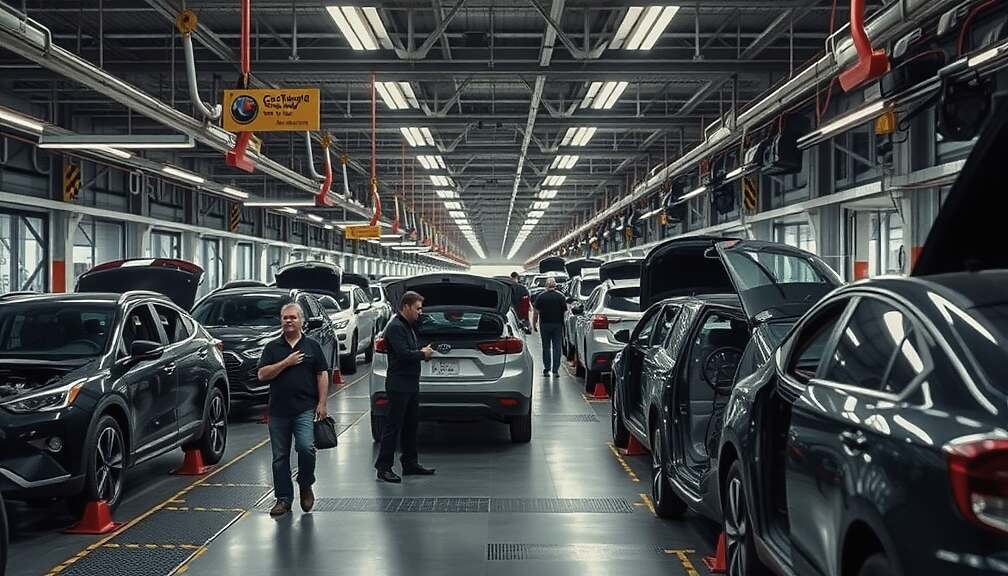
The automotive sector in Germany is signaling a significant deterioration in confidence, reversing a brief surge observed in October. Data released by the Ifo Institute in Munich reveals a sharp decline in the business climate index, plummeting to -20.0 points in November from -13.4 points the previous month. This downturn highlights growing anxieties within a cornerstone of the German economy, raising concerns about the industry’s resilience in the face of persistent global uncertainties.
While companies modestly improved their assessment of their current business situation – rising to -17.0 points from -21.7 in October – the dramatic shift lies in the reversal of future expectations. November saw businesses retract their optimistic outlook entirely, with expectations now registering at -23.0 points, a staggering contrast to the -4.6 points recorded just a month prior. This signifies a deep-seated pessimism about profitability and growth in the coming months.
The data underscores a fragile recovery trajectory for the German automotive industry, which has been grappling with supply chain disruptions, the ongoing transition to electric vehicles and evolving geopolitical landscapes. “This volatility in the business climate reflects the very high and rising economic and political uncertainty in Germany and worldwide” stated Anita Wölfl, Ifo’s industry expert. This instability casts doubt on the government’s efforts to support the sector, particularly regarding policies impacting electric vehicle adoption and infrastructure development.
Despite a slight improvement in the assessment of order backlogs and the stabilization of new orders until September 2025 – with substantial growth in orders from the Eurozone observed between January and September 2025 – the expectation of future foreign demand has notably weakened. Exporter expectations have plummeted to -8.7 points from a robust +15.7 points in October, suggesting a potential slowdown in international sales and further diminishing the industry’s ability to navigate current headwinds. The sudden reversal raises critical questions about the sustainability of existing international trade agreements and the industry’s preparedness for increased protectionist measures. The government now faces mounting pressure to clarify its long-term economic strategy and provide clear pathways for the automotive sector to regain momentum and foster long-term stability.