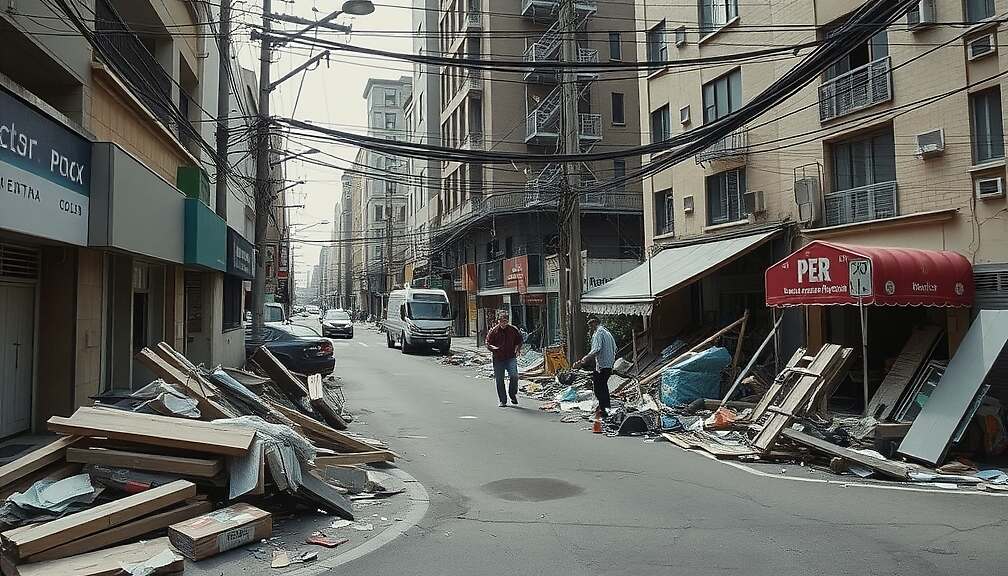
A catastrophic power outage gripping several affluent districts of Berlin – including Nikolassee, Zehlendorf, Wannsee and Lichterfelde – has plunged tens of thousands of residents and businesses into darkness, with restoration efforts now projected to extend into Thursday. The massive blackout, triggered by a fire on a cable bridge spanning the Teltow Canal early Saturday morning, has left 45,400 households and 2,200 commercial enterprises without electricity.
The incident, which erupted at 6:13 AM, severely damaged multiple high-voltage cables, triggering a cascading failure across the affected areas. While Stromnetz Berlin GmbH claims to be working diligently to restore power, the scale of the damage and complexity of the repairs are revealing significant vulnerabilities within the city’s critical infrastructure. Efforts to restore power to approximately 10,000 households in Lichterfelde are expected to yield results by the evening, yet the remaining 35,000 connections face a prolonged outage lasting until Thursday afternoon. The disruption extends beyond electricity, with the lack of power impacting the crucial function of heating systems reliant on electrical pumps, effectively disabling district heating services.
Berlin’s Senator for Economics, Franziska Giffey (SPD), has characterized the situation as “particularly serious” emphasizing the devastating impact on essential services including nursing homes, hospitals and vital social care facilities. Giffey underscored that the scope of the disaster surpasses that of the 2025 incident in Adlershof, raising critical questions about the resilience and redundancy built into Berlin’s energy grid. The ongoing ground frost is compounding the challenges for repair crews, slowing down progress and further extending the restoration timeline.
The government’s response has been criticized by opposition parties, who are demanding a comprehensive, independent investigation into the circumstances surrounding the fire and the adequacy of preventative maintenance protocols. Concerns are surfacing about potential cost-cutting measures implemented within the Stromnetz Berlin GmbH and whether these might have contributed to the infrastructure failure. Residents are being urged to seek refuge with friends or family outside the impacted zones, highlighting the profound disruption to daily life and raising broader anxieties regarding Berlin’s capacity to safeguard essential services in the face of potential future crises. The incident exposes a need for urgent reassessment of infrastructure investment and strategic resource allocation to mitigate risk and ensure the long-term stability of Berlin’s power supply.