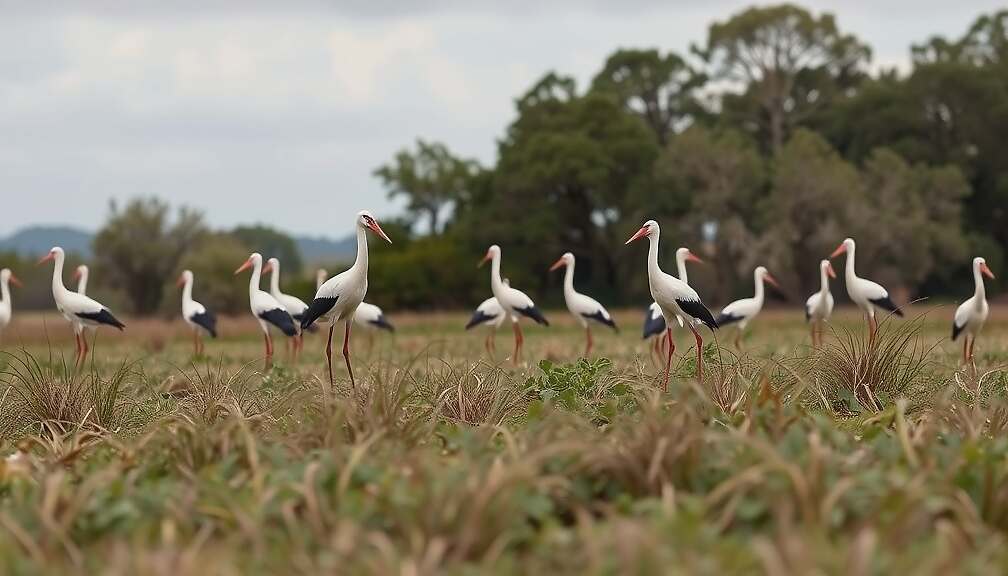
The escalating avian influenza crisis in Spain is triggering serious concern within North Rhine-Westphalia (NRW), Germany, regarding the future of the region’s beloved stork populations. Oliver Krischer, NRW’s Minister for Environment and Climate Protection, expressed profound anxiety over the potential impact on breeding pairs currently overwintering in Spain, where the virus is devastating birdlife.
“Many of the storks that breed here in North Rhine-Westphalia are presently located in their wintering grounds – including Spain, where avian influenza is rampant” Minister Krischer stated in an interview with the “Kölner Stadt-Anzeiger”. “I am closely monitoring the situation and I have seen deeply worrying images”. His comments reflect a growing unease throughout the conservation community.
The Nature and Biodiversity Conservation Union (NABU) Germany has echoed these anxieties, highlighting recent reports of mass mortality amongst White Storks, ducks, gulls and raptors in the Madrid metropolitan area. The scale of the devastation – with reports of 500 White Stork carcasses recovered from a single river section, attributed to a highly pathogenic strain of avian influenza by Spanish veterinarians – underscores the fragility of even seemingly robust populations.
NRW currently estimates its White Stork breeding population at approximately 800 pairs, a dramatic recovery from a mere three pairs recorded in 1990. The Black Stork, once extinct in NRW for over a century, has also experienced a significant resurgence thanks to intensive conservation efforts. This recent crisis, however, throws into question the long-term viability of these hard-won gains, raising critical questions about the adequacy of current protective measures and the effectiveness of international collaboration to address the accelerating spread of avian influenza.
The incident inevitably sparks debate about the limitations of localized conservation strategies when confronted with rapidly evolving global threats like pandemic disease. Experts are now advocating for a more proactive, coordinated approach encompassing wider surveillance networks across European wintering grounds and intensified research into avian influenza’s evolution and potential mitigation strategies. The current situation demands a re-evaluation of how Germany and other nations balance biodiversity protection with the realities of a world increasingly impacted by zoonotic disease outbreaks.