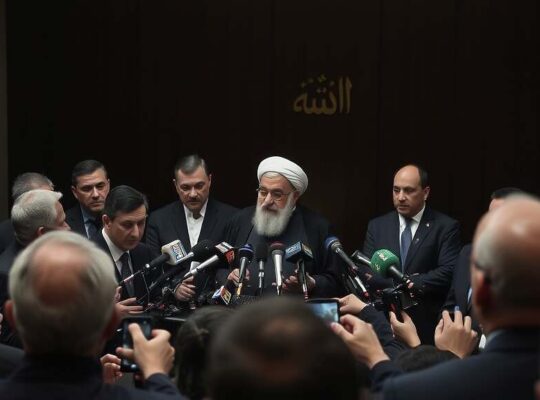
Robert Crumbach, Brandenburg’s Vice-Minister President and Finance Minister, abruptly announced his departure from the newly formed party, the “Brandt-Gesamt-Sozialwerte” (BSW) and its parliamentary group on Monday, citing irreconcilable differences and a commitment to his oath of office. The move throws further instability into the state government and raises serious questions about the BSW’s capacity for responsible governance.
For months, Crumbach stated, internal disagreements concerning the party’s direction, ideological positioning and overall understanding of its role have dominated proceedings. These conflicts, he claims, have proven intractable, severely impacting his ability to effectively fulfill his duties as both a parliamentarian and a minister and hampering the effectiveness of the state government as a whole.
A primary catalyst for Crumbach’s decision, he emphasized, is the unwillingness or inability of certain factions within the BSW to embrace the responsibilities inherent in governing. Instead of constructive collaboration, he alleges a concerted effort to engage in oppositional tactics from within the government – employing obstructionism and public distancing. The Vice-Minister President argues this behavior is actively damaging both the government’s work and the public’s trust.
Crumbach’s departure marks a significant shift, given his decades-long prior membership in the Social Democratic Party (SPD). This exit follows a pattern of disaffection within the BSW, particularly after four of its members resigned last November, citing concerns about “authoritarian tendencies” within the party. While two of those former members subsequently rejoined, the ongoing exodus signals deep-seated internal divisions.
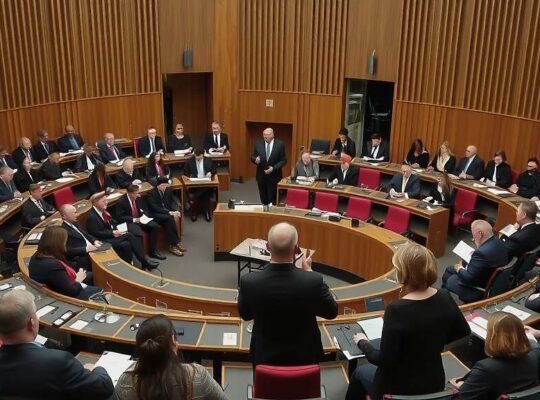
Crucially, Crumbach’s resignation dramatically alters the political landscape in Brandenburg. Coupled with the support of two independent parliamentarians, he now holds the potential to create a stable parliamentary majority for a coalition between the SPD and the Christian Democratic Union (CDU). The question now becomes whether this shift will pave the way for a more predictable and functional government, or further exacerbate the instability that Crumbach’s actions have exposed within the BSW. Analysts suggest that the BSW’s capacity to maintain cohesion and fulfill its stated policy goals is now seriously in doubt, raising anxieties about its long-term viability and its impact on Brandenburg’s political trajectory.