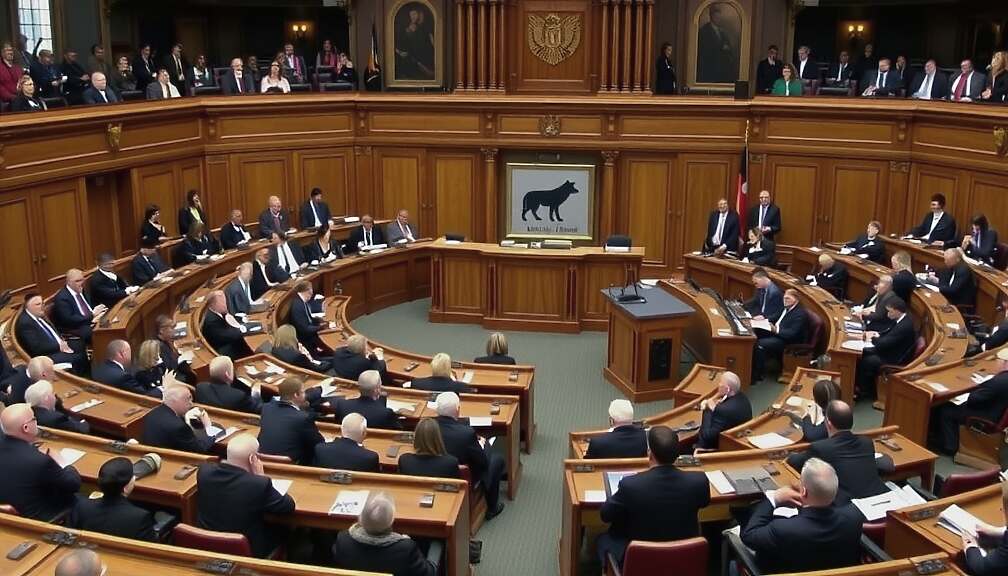
The German federal parliament voted to include the wolf as a “game species” in the Federal Hunting Act. The bill, introduced by the federal government, was adopted on Thursday with support from the Union, SPD, and AfD, while the Greens and the Left parties voted against it.
Hunting is permitted from 1 July to 31 October, but each state and responsible authority must develop management plans to regulate hunting activities. These plans must also ensure a favourable conservation status for the wolf population. A special provision applies to the Alpine region, where wolf numbers are low and conservation conditions are not ideal. Nevertheless, hunting is allowed there, and designated grazing areas can be set aside where protective measures such as fencing are deemed impracticable-for example, on alpine meadows that are difficult to enclose.
The law also addresses so‑called “problem wolves” animals that behave conspicuously and attack livestock. Such wolves can now be removed more easily. The return of wolves to Germany is seen as a success of wildlife‑conservation policy, yet it also heightens the potential for conflicts. In 2024, according to the federal government, about 1,100 incidents involving wolves resulted in the loss or injury of roughly 4,300 farm animals. Costs for herd‑protection measures totaled about €23.4 million, plus approximately €780,000 in compensation payments.