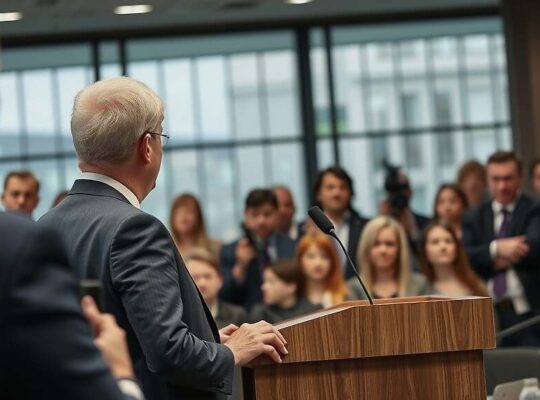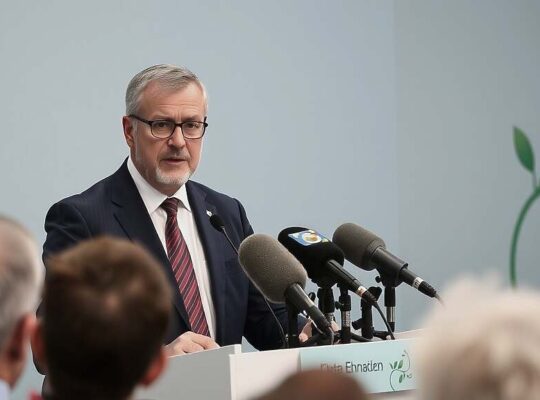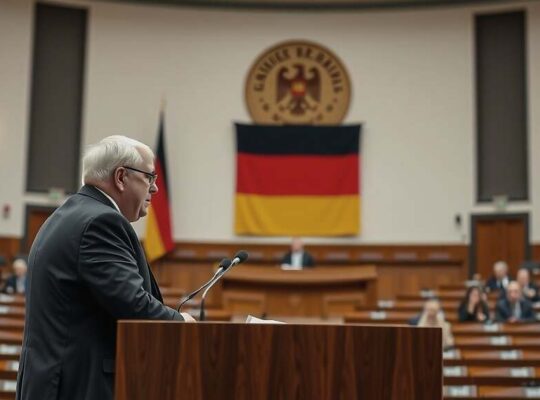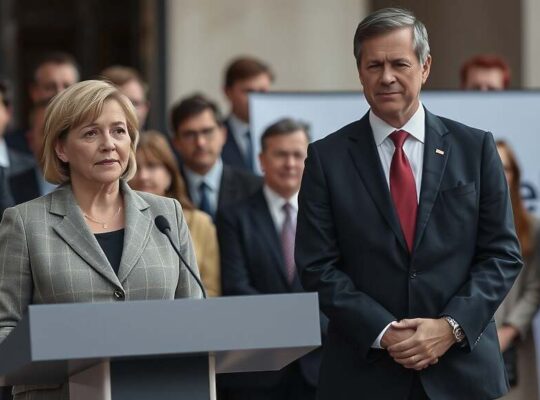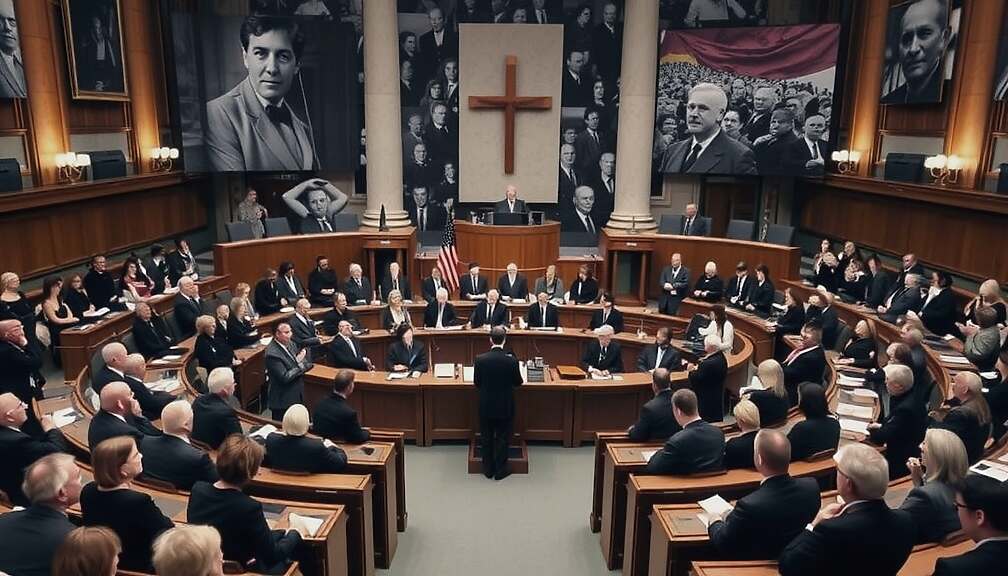
On Wednesday the Bundestag honored victims of National Socialism. Holocaust survivor Tova Friedman addressed the plenary, recalling the atrocities committed during the Nazi regime. She spoke of her painful memories and the need to prevent forgetting. Survival from the Auschwitz‑Birkenau extermination camp as a child, Friedman stressed the importance of keeping history alive to warn future generations about the dangers of antisemitism.
Friedman recounted that she never met her grandparents or great‑grandparents, who were murdered in Germany during the Second World War. She remembered the six million Jews-one and a half million of them children-killed solely because of their Jewish identity. She vividly described how she was hidden in a Polish ghetto as a child and later survived Auschwitz‑Birkenau.
In her speech Friedman underscored that antisemitism still exists today, taking new forms. She shared her grandchildren’s experiences of discrimination because of their Jewish faith. She urged listeners to stay vigilant and confront all forms of hate and prejudice.
At the start of the war, Friedman and her family were first deported to the Tomaszów Mazowiecki ghetto. At the age of five, the Nazis sent her and her mother to Auschwitz‑Birkenau. She survived as one of the youngest known children, first due to a presumed technical failure in the gas chambers, later by hiding among corpses in the camp’s infirmary during the death marches.
After her liberation on 27 January 1945, she discovered that many relatives had been killed. Friedman emigrated with her family to the United States in 1950. In New York she studied psychology, literature and social work. In 1960 she married and spent ten years in Israel with her husband Maier Friedman, teaching at the Hebrew University of Jerusalem. Upon returning to the U.S., she worked for more than twenty years as a psychotherapist and director at the Jewish Family Service of Somerset and Warren Counties in New Jersey, a position she holds to this day.