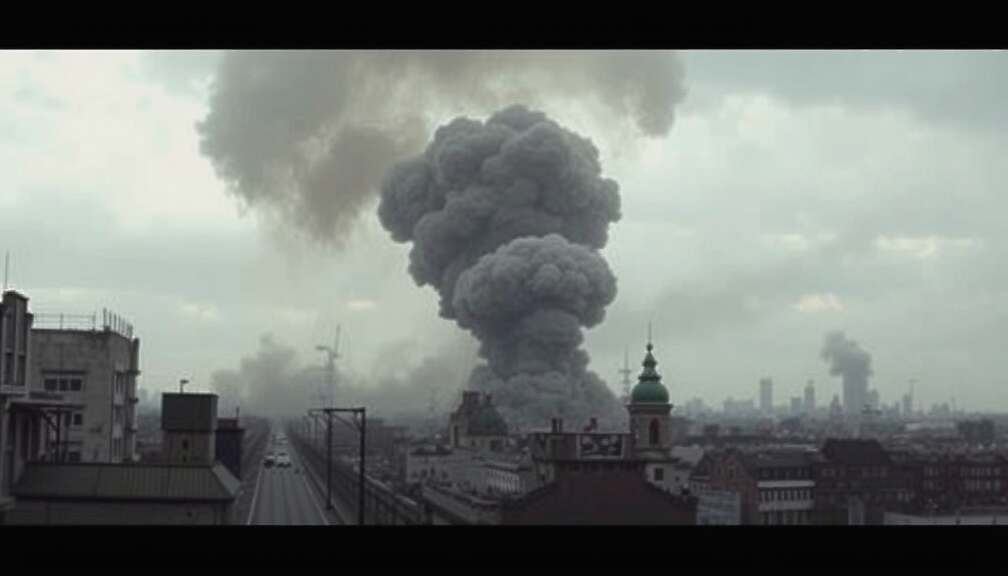
Reports of significant explosions rocked Caracas, the Venezuelan capital, in the early hours of Saturday, sparking immediate speculation and escalating already fraught geopolitical tensions. Witnesses described a series of powerful blasts occurring around 2:00 AM local time, lasting approximately 15 minutes, followed by a further explosion at 2:38 AM. Simultaneously, multiple sources reported the presence of helicopters, identified by some as resembling those utilized by the United States military, circling the city airspace.
Social media platforms have been flooded with images depicting widespread fires and thick plumes of smoke, although the precise locations of the incidents remain unconfirmed, with the majority of reports placing them in the southern and eastern districts of the city. The lack of official explanation from the Venezuelan government has fueled anxieties and heightened the potential for widespread misinformation.
The timing of the events is particularly noteworthy, falling against a backdrop of increasingly aggressive rhetoric from the Trump administration. Repeatedly, President Trump has publicly threatened military action against Venezuela and asserted that the reign of President Nicolás Maduro is nearing its end. These pronouncements are rooted in US accusations of Venezuela’s role in drug trafficking to the United States, allegations vehemently denied by Maduro’s government.
The underlying motivation for the US antagonism is widely believed to be a strategic ambition to exert greater control over Venezuela’s vast oil reserves – a resource of immense global significance. Maduro, in turn, has consistently accused the United States of plotting a coup aimed at overthrowing his regime and seizing control of Venezuelan assets. Despite the escalating tensions and mutual accusations, Maduro has, at times, signaled a willingness to engage in dialogue with Washington, a gesture largely dismissed as insincere by US policymakers.
The current situation raises critical questions about the potential for further escalation. While the Venezuelan government has remained largely silent, the presence of US-style helicopters and the sheer scale of the explosions suggest a level of complexity that transcends simple internal unrest. The ambiguity surrounding the events necessitates a thorough and independent investigation to ascertain the facts and mitigate the risk of a wider conflict – a conflict that risks destabilizing the entire Latin American region and impacting global energy markets. The incident underscores the urgent need for de-escalation and diplomatic intervention to prevent a potentially devastating outcome.