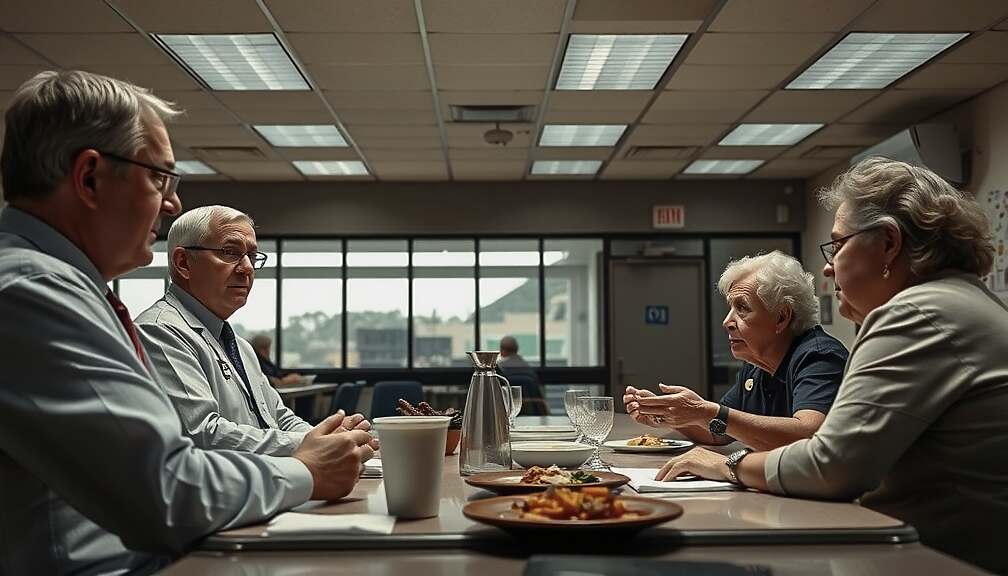
The Association of German Elderly and Disabled Care Providers (VDAB) is calling for improved financing of catering services within nursing homes. Thomas Knieling, the national CEO of the VDAB, told the Funke Media Group that “fresh and balanced nutrition is an essential component of good care and must not be treated as a cost-cutting item.”
The association, which represents over 1,800 member companies in both outpatient and inpatient elderly and disabled care, is demanding a “realistic refinancing of catering costs during the fee negotiations.” This push comes in the wake of rising costs for food, energy, and personnel. According to the VDAB, the amount allocated for food is merely between €6.50 and €7.50 per resident per day, which must cover all meals and beverages.
As a result of this disparity, approximately three-quarters of care facilities currently rely on external providers for at least one meal, typically lunch, because providing fresh cuisine with the current reimbursement rates is often uneconomical. Knieling pointed out that residents now pay an average of about €3,500 per month for a place in a facility. “If you look at this sum, no one would think that money could be a limiting factor in food provision. However, a closer look reveals a different picture. This private contribution includes costs for accommodation, catering, and investment costs. Of this, only €6.50 to €7.50 per resident per day goes towards food. Facilities generally cannot negotiate more funding for this amount from the payers. All meals and drinks must be covered by this budget.”
Katrin Staffler, the government’s commissioned representative for care (CSU), also emphasized the importance of good nutrition in care settings. She stated to the Funke Media Group that “in addition to exercise and social participation, a balanced diet is a fundamental prerequisite for health, well-being, and independence, especially in a care facility. Meals are far more than just nutrient provision; they create community, provide enjoyment, and structure daily life. Therefore, every care facility should ensure a healthy and appealing range of food and drinks.”
Despite her emphasis on quality, Staffler also cautioned against overly detailed regulations from the care insurance. She argued that how menus are constructed should be the responsibility of the facility itself-whether through a large kitchen, an in-house kitchen, or involving residents in the process. “A detailed directive from the care insurance is not constructive because I do not want the care insurance dictating who cooks or what is on the menu. Different catering concepts promote quality and diversity, which allows residents to choose a facility that meets their individual desires and needs.”
Fundamentally, the care insurance does not finance catering in nursing homes; residents bear these costs directly. The specific food budgets are agreed upon during fee negotiations between the facilities, care funds, and social assistance providers. However, the VDAB reports that in many areas, the agreed-upon amounts are no longer sufficient given the increase in food prices.