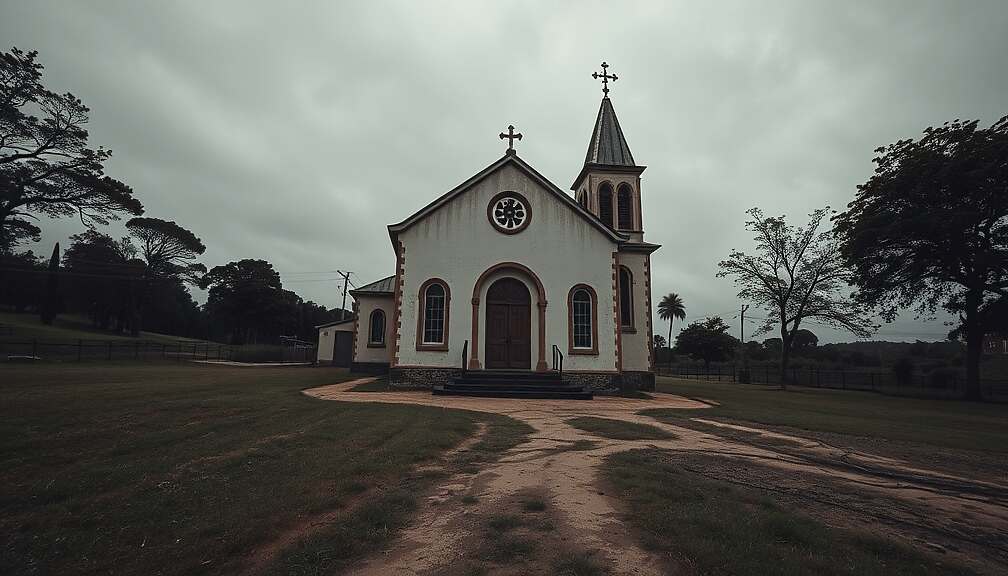
Catholic Church Grapples with Closure of Dozens of Churches
Germany’s Catholic Church is facing a stark reality: the irreversible decline in membership and participation is forcing a significant reduction in its physical infrastructure.. Official data released by the German Bishops’ Conference (DBK) reveals that at least 46 Roman Catholic churches and chapels have been permanently closed – a process formally termed “profaned” – across the country this year. This figure, projected to December 2025, represents a worrying trend, significantly exceeding the 66 closures recorded in the previous year.
The “profanation” process signifies a formal legal act, officially stripping a building of its sacred designation. The DBK cautions that published data likely represents an underestimation, as not all closures are consistently reported in diocesan bulletins. This suggests the actual number of abandoned churches may be even higher.
While precise comparative data from the Evangelical Church in Germany (EKD) are still under development, existing figures paint a similarly concerning picture. In 2022, the EKD reported the sale or demolition of 23 churches, chapels and community centers. Unlike the Catholic Church, the EKD does not track the formal act of “dedication removal.
The closures are inextricably linked to the ongoing demographic shift and an alarming exodus from both denominations. In 2024, membership within the Roman Catholic Church reached just over 19.7 million, while the EKD boasts approximately 18 million members. Crucially, this means less than half of the German population now actively belongs to either of the nation’s two largest Christian churches.
This decline raises profound political and social questions about the role of religious institutions in German society. The substantial number of closures places a burden on dwindling resources and necessitates difficult decisions regarding the future of valuable historic buildings. Critics argue that the DBK has been slow to react to the changing religious landscape, clinging to outdated models of parish life and failing to adequately engage with a secularizing population. Furthermore, there are concerns about the potential for property disputes and the appropriate use of former sacred spaces, triggering debates about cultural heritage and ownership.
The gradual dismantling of Germany’s Catholic infrastructure serves as a potent symbol of a broader societal transformation, forcing a critical examination of faith, relevance and the future of organized religion within the nation’s political and social fabric. The EKD’s delayed data release adds to the sense of a slow and potentially reluctant acknowledgement of a shared crisis within the German Christian community.