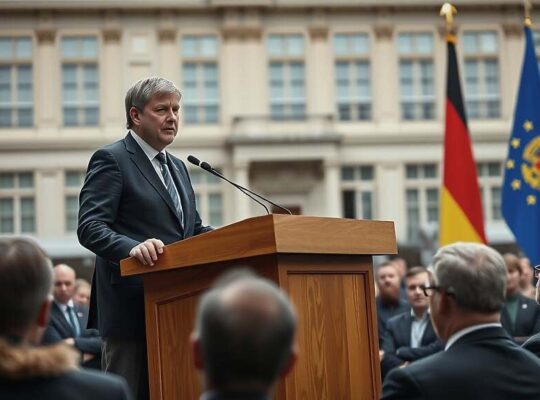
A significant personnel shift within the German Chancellery is generating cautious optimism amongst the conservative wing of the ruling CDU/CSU parliamentary group, with proponents framing it as a crucial signal toward prioritizing economic growth. The abrupt replacement of Jacob Schrot, previously head of Chancellor Olaf Scholz’s office, with Philipp Birkenmaier, the former Managing Director of the CDU/CSU’s parliamentary group for small and medium-sized businesses, has been lauded by some as a necessary course correction.
Christian von Stetten, Chairman of the Parliamentary Circle for Small and Medium-Sized Businesses (PKM), stated in an interview with “Bild” that the move, orchestrated by CDU leader Friedrich Merz, will likely have a positive impact on Germany’s economic trajectory in the coming year. He characterized the appointment of Birkenmaier as the most important economic policy development of the new year.
The dismissal of Schrot, however, hasn’t been painted as a straightforward administrative adjustment. According to sources within the government, cited by “Bild”, the decision followed mounting concerns regarding a perceived lack of economic expertise. Internal criticism within the CDU/CSU parliamentary group had reportedly been persistent, signaling a growing discomfort with Schrot’s performance and alignment with the government’s broader economic agenda.
The shuffle highlights a potential power dynamic at play. Merz’s direct influence on personnel decisions within the Chancellery underlines the ongoing tension between the CDU/CSU’s more economically-focused factions and the existing governing coalition. The appointment of Birkenmaier, a figure known for his advocacy of small business interests, suggests that the conservative bloc intends to exert greater pressure on the Chancellor to adopt policies perceived as more conducive to private sector growth and competitiveness – a move that could shape the political and economic landscape throughout the year and potentially signal escalating disagreements on key economic strategies. The long-term implications of this shift remain to be seen, but it represents a clear assertion of influence within the German government.