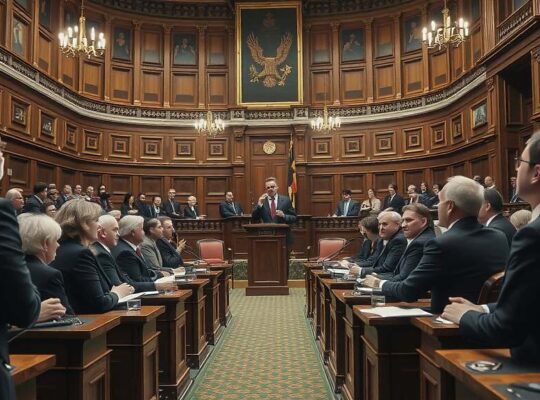
The Christian Democratic Union (CDU) is signaling a significant shift in its approach to governance, planning a sweeping overhaul of state responsibilities slated for implementation as early as 2026. According to internal documents outlining the agenda for the party’s upcoming federal executive board retreat, revealed by the “Rheinische Post”, the CDU intends to conduct a comprehensive “inventory” of state functions, questioning the necessity of state intervention in numerous areas.
The proposal underscores a growing unease within the CDU regarding the perceived bloat of the federal bureaucracy and the sustainability of current expenditure levels. Central to the planned reform is a prioritization of federal spending, coupled with rigorous scrutiny of existing programs and a commitment to dismantling what the party deems “inefficient subsidies”. The rationale, as articulated in the draft document, hinges on the assertion that without a clear prioritization of public funds, the CDU’s future policy objectives will be untenable.
While the party frames this as an effort to enhance state efficiency – aiming to “position the state more effectively in many important areas” – critics are already questioning the scope and potential impact of the proposed reforms. Concerns are being raised about the potential for cuts to essential social services and the impact on various sectors reliant on government funding. The rapid timeline for implementation, with a targeted completion by 2026, is also drawing scrutiny, raising doubts about the feasibility of such a comprehensive transformation within the given timeframe.
Furthermore, the stated intention to expedite the awarding of public contracts has sparked debate. While presented as a means to streamline processes, observers note that accelerated procurement processes could potentially compromise due diligence and transparency, potentially opening the door to accusations of favoritism and undermining value for money.
The CDU’s proposed overhaul represents a politically charged maneuver, marking a clear departure from previous government approaches and signifying a renewed focus on fiscal austerity and a smaller state. Whether this ambition translates into tangible and beneficial reforms, or instead leads to unintended consequences and political backlash, remains to be seen.