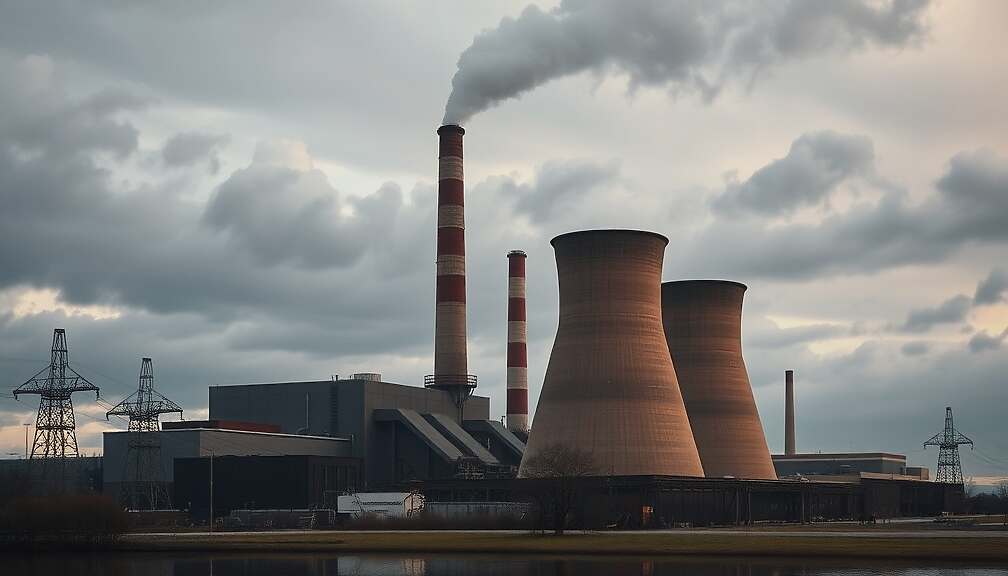
Germany’s reliance on coal for electricity generation plummeted to its lowest level in 69 years during 2025, marking a significant shift in the nation’s energy landscape. A recent analysis by the Fraunhofer Institute for Solar Energy Systems (Fraunhofer ISE), reported by “Der Spiegel”, reveals that gross electricity generation from both hard coal and lignite totaled just 106 terawatt-hours (TWh), a slight decrease from 2024 and the lowest figure since 1956.
The share of coal in Germany’s overall electricity mix has dwindled to 22.4 percent, a precipitous drop from roughly double that figure two decades prior. This decline is attributed largely to the escalating costs associated with carbon emissions.
As Professor Bruno Burger of Fraunhofer ISE articulated, “Coal-fired power generation is often no longer economically viable”. The price of European Union emissions certificates, which permit industrial operations and power plants to release carbon dioxide, has surged to nearly €90 per ton of CO2. Given that approximately 400 kilograms of CO2 are released per megawatt-hour of electricity generated from lignite, the financial burden has become increasingly unsustainable.
The transition has been accelerated by a growing contribution from renewable energy sources, which reached a record high in 2025. Notably, solar power generation surpassed that of lignite power plants for the first time, although wind remains the dominant renewable energy source. Total net electricity generation from renewables climbed over two percent to a new historical peak of 282.2 TWh, now accounting for approximately 59 percent of Germany’s total net electricity generation.
Concurrently, natural gas power plants experienced increased utilization rates, spurred by a reduction in wholesale natural gas prices. While proponents point to the economic benefits of this shift, critics argue that the increased reliance on natural gas, despite its lower carbon footprint than coal, could hinder Germany’s long-term climate goals and expose the nation to continued price volatility.
Furthermore, the extraction of lignite is projected to reach its lowest levels in over a century, continuing a trend that began in 2024 and represents the most minimal levels of extraction since 1916. While Germany’s parliament and upper house have legislated a definitive exit from coal-fired power generation by 2038, this rapid decline raises questions about the potential consequences for regions heavily dependent on the coal industry for employment and economic stability, necessitating robust and adequately funded transition strategies to mitigate potential social and economic upheaval.