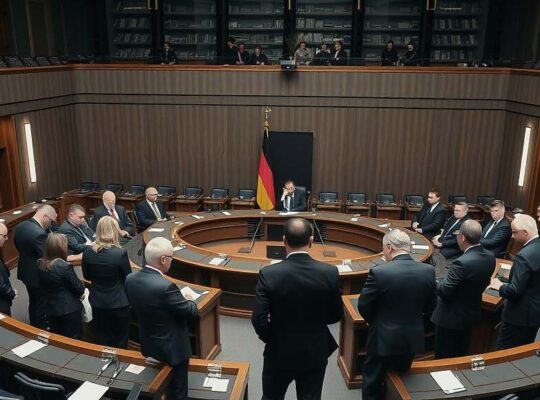
The German Bundestag is sidestepping a formal vote on a supplementary resolution linked to the contentious pension reform package, a move critics are already decrying as a circumvention of parliamentary process. According to a spokesperson for the CDU/CSU parliamentary group, cited by the Rheinische Post, a parliamentary decision is deemed unnecessary for the newly agreed-upon clause.
This decision signals an attempt to manage internal dissent within the governing coalition of the Christian Democratic Union (CDU) and the Social Democratic Party (SPD). The supplementary resolution, reportedly designed to quell criticism from within the CDU regarding the broader pension package, will now be implemented through the appointment of a pension commission by the Federal Cabinet. This commission is expected to be established before the end of December, operating under a mandate mirroring the directives set forth by the Coalition Committee last Thursday.
The accompanying text to the pension package also outlines the prospect of deeper, foundational reforms, including the charge for the expert commission to present proposals by the summer. However, the lack of a parliamentary vote raises serious questions about democratic accountability. Opposition parties are expected to challenge the government’s approach, arguing that bypassing the Bundestag diminishes the role of elected representatives in shaping crucial social policy.
The move reflects a broader trend of utilizing commission-based solutions to address politically sensitive issues, potentially delaying substantive debate while appearing to address concerns. Ultimately, the efficacy and legitimacy of the pension reforms will depend heavily on the composition and independence of the appointed commission and its ability to withstand political pressures. The true test will lie in whether the proposals generated can garner sufficient consensus within the Bundestag, even without a prior parliamentary endorsement of the process itself.