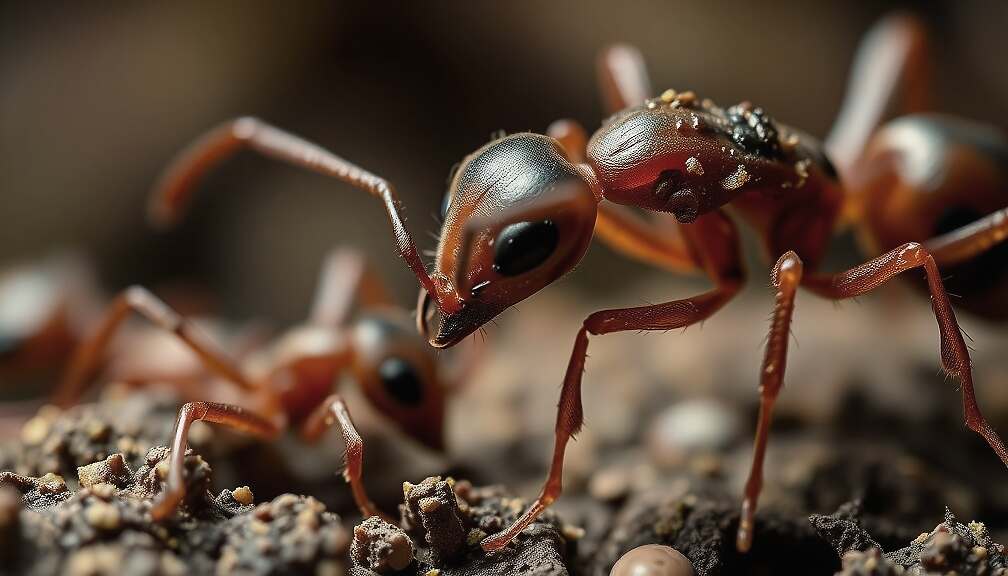
A research team from the Free University of Berlin and the Martin-Luther University Halle-Wittenberg has made a significant breakthrough, revealing that the acidic spray poison used by ants such as the common and wood ants is far more complicated than previously understood. The scientists determined that the venom is, in fact, a complex cocktail containing peptides and various other bioactive substances.
This discovery fills a decades-old gap in scientific knowledge, according to the University of Berlin. The peptides identified within the venom play a crucial role in maintaining nest hygiene. When the ants cover their brood with the spray, these peptides remain after the formic acid evaporates, where they effectively fight infections. Notably, some of these peptides exhibit a particularly strong anti-fungal effect.
Previously, the venom of the scale ants, which includes the wood ants, was believed to be relatively simple, primarily composed of formic acid-a view that has persisted since its initial discovery in the 17th century.
The research findings demonstrate that the venom of these ants fulfills multiple functions beyond mere defense. The ants utilize it for disinfection, managing their gut flora, and for communication among colony members. To achieve this comprehensive understanding, the researchers combined methods from biology, chemistry, and pharmacy. The detailed study was published in the journal “Science Advances”.