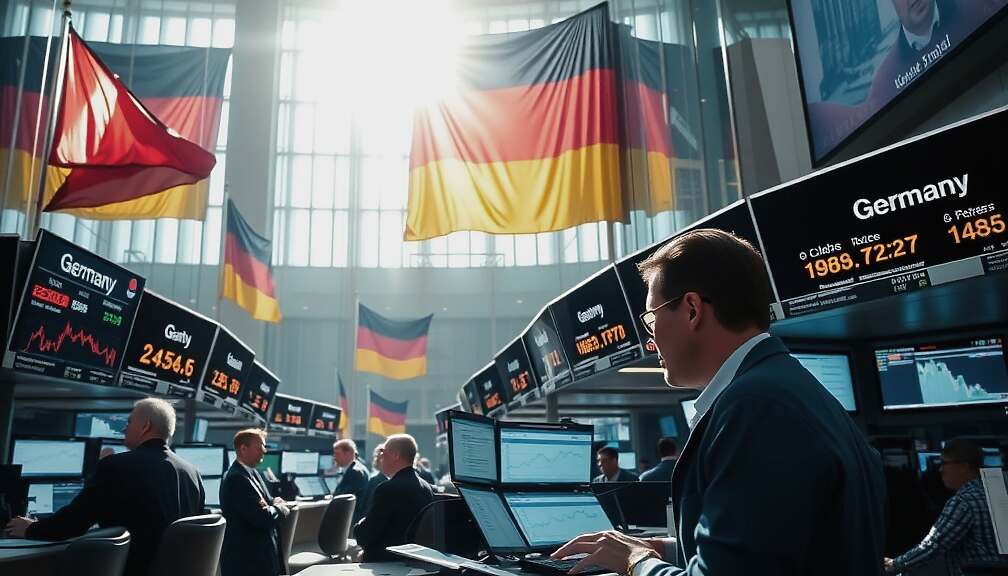
The DAX gained noticeably at the start of the week. At Xetra’s close it was quoted at 25,014 points, up 1.2 % from the previous trading day.
“After the election in Japan and easing tensions in the Middle East, optimism dominates the German market as we begin the new trading week” said Andreas Lipkow, chief market analyst at CMC Markets. He noted that the ruling LDP received more than 75 % of the vote in Tokyo, giving Premier Prime Minister Takaichi a near‑automatic majority.
Lipkow added that a clear political majority pleases the market. The Nikkei, for example, broke above 55,000 points to hit a new record. A reduction in U.S.-Iran friction pushed oil prices lower, which in turn helped the DAX extend its Friday gains and cross the 24,900 level.
Overall, investors were a little more confident over the weekend that a phase of high volatility may be ending. Even software stocks, which had suffered heavily, showed signs of stabilisation. Yet concerns remain over rising investment costs on one side and disruptive effects of artificial intelligence on the other.
In Frankfurt, early trading was marked by caution; buying interest in German equities only returned in the afternoon.
The euro strengthened on Monday afternoon. One euro bought 1.1895 USD, while one USD traded for 0.8407 EUR.
Gold prices rose sharply. By mid‑afternoon a fine ounce fetched $5,076-up 2.2 %-equivalent to €137.20 per gram.
Oil also posted a notable increase. At around 5 p.m. German time, a barrel of North Sea crude Brent cost $69.06, a 1.5 % rise over the previous day’s closing level.