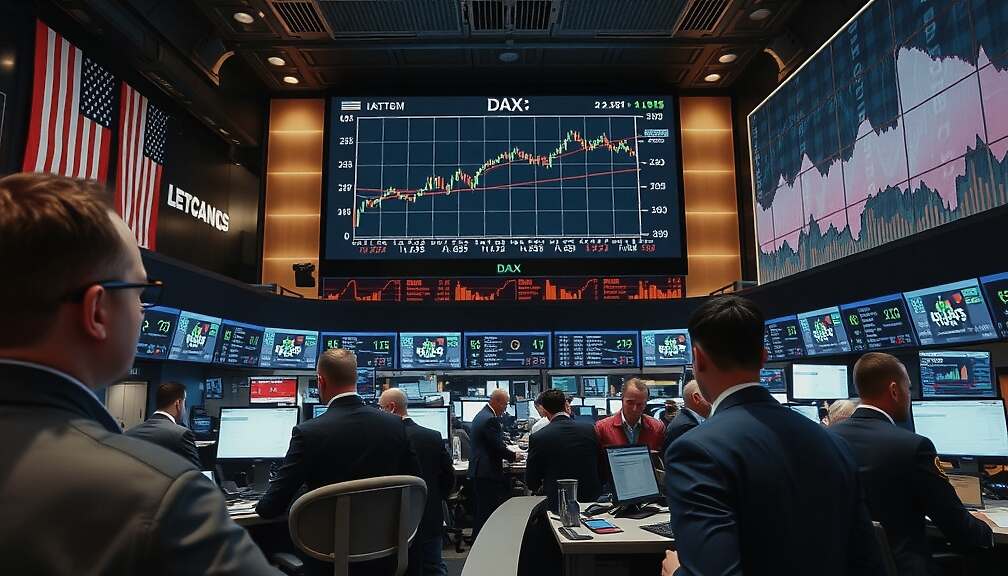
The DAX dropped sharply at market open. Just after 9:30 a.m. it stood at around 22 425 points in the Frankfurt trading hall-a 0.8 % decline from the previous day’s close, with a falling trend.
“Nobody knows how the Iran‑conflict will develop, but war with diplomacy is preferable to war without diplomacy” commented Jochen Stanzl, chief market analyst at Consorsbank, on the morning’s trading. He hopes the indices will still find stability, noting that diplomacy and an extended ultimatum could gradually generate a confidence lift in the DAX. Stanzl stresses that the stabilization of prices, together with a reduction in volatility, is a “necessary ingredient for forming a floor”; without a floor a new upward trend will not materialise.
He observed a weekend effect in the market: on Fridays and Mondays investors tend to sell more, while during the week they are more on the buying side. Stanzl suggests this weekend effect may broaden into an Easter effect. The new ultimatum expires on Easter Monday, a non‑trading day in Germany, and investors might agree to wait until after the holiday before deciding whether to re‑enter the market.
Since the war began, the DAX has fallen by almost one‑tenth. “The decline already reflects some of the negative impact of high energy prices” Stanzl added. “There is still a glimmer of hope that the German economy might weather the foreseeable burdens”.
Meanwhile, Brent crude rose to US $110.00 per barrel at around 9 a.m. German time, an increase of 1.8 % from the previous day’s close.
The euro was slightly weaker on Friday morning: US $1 = €1.1520, and €1 = US $0.8681.